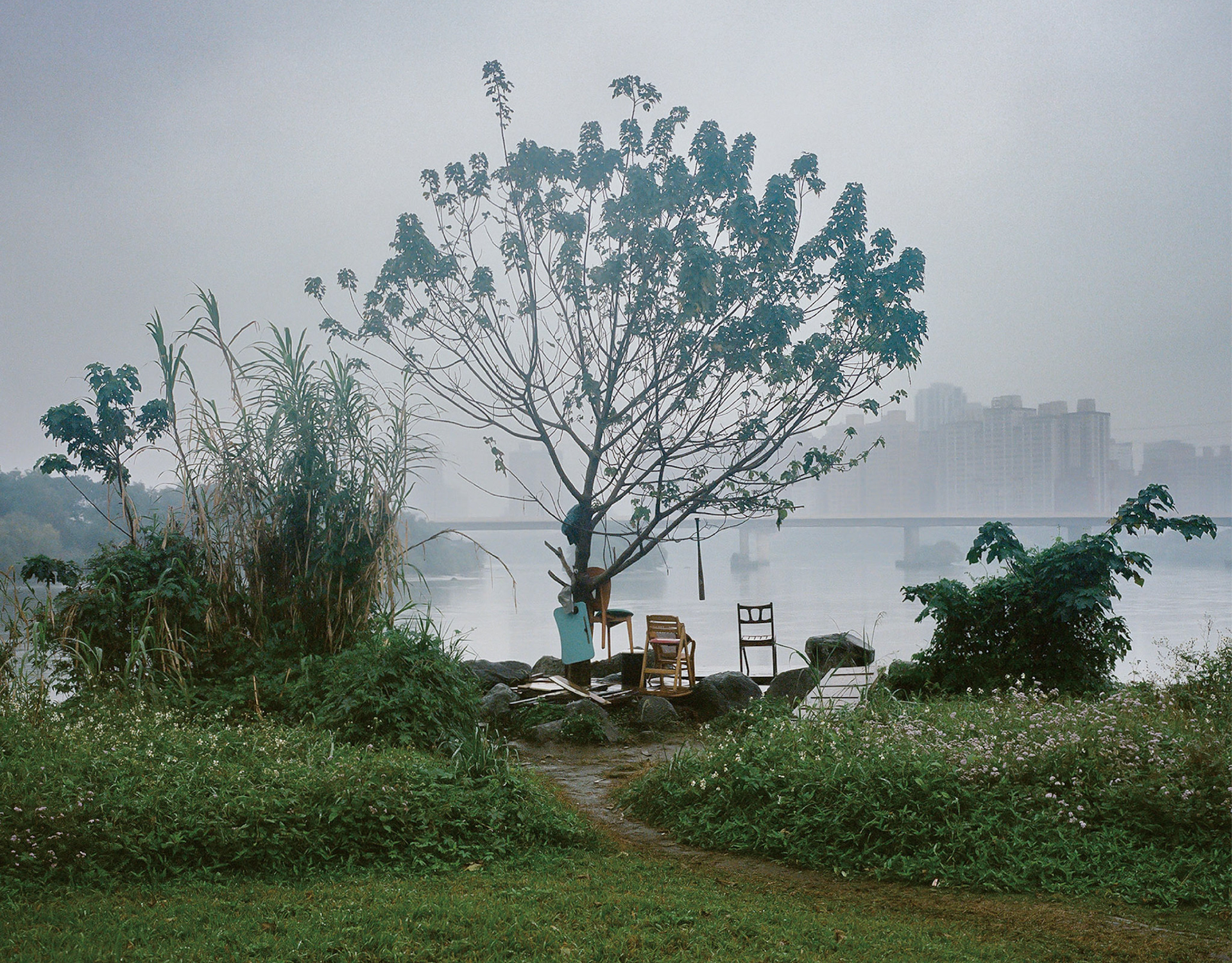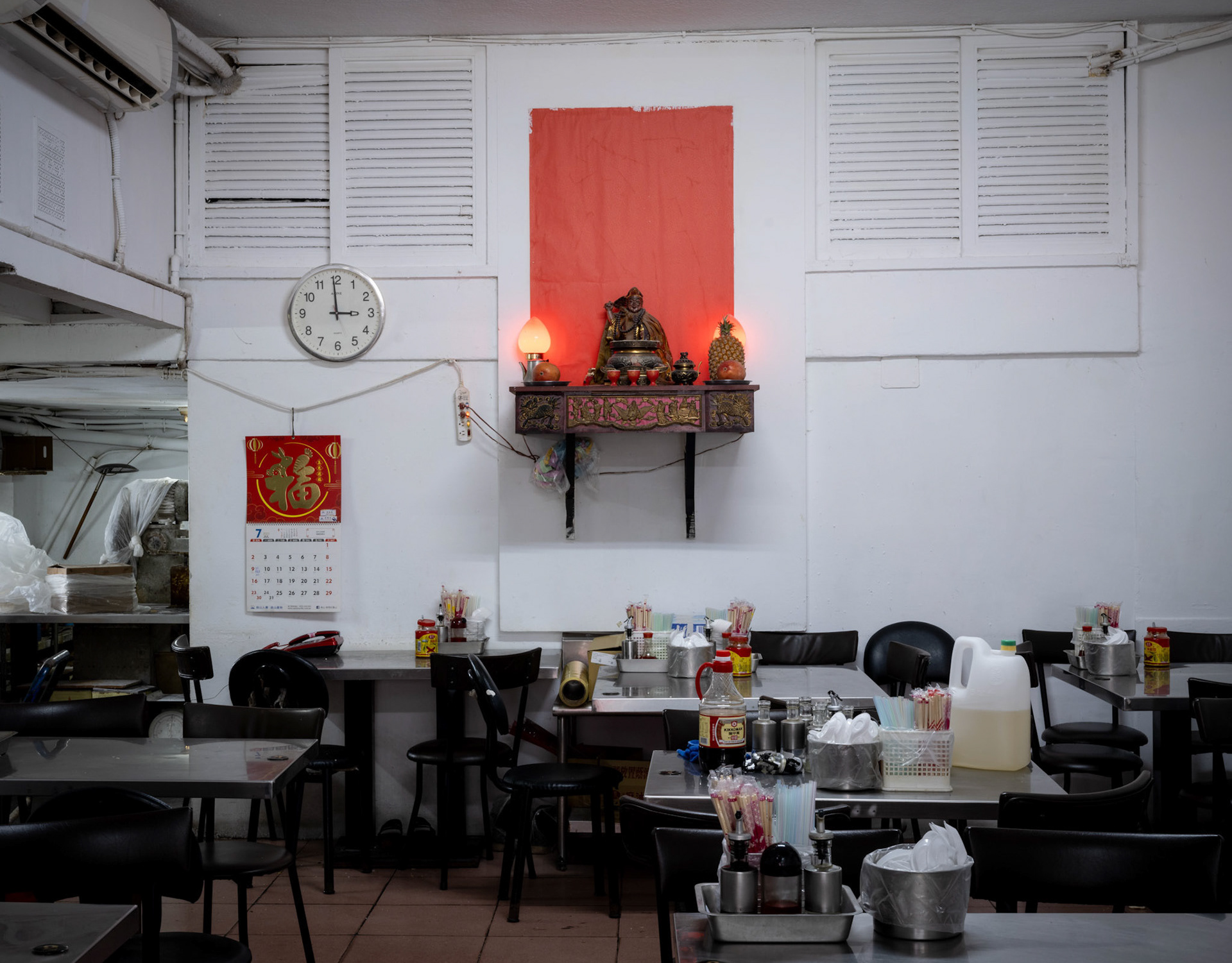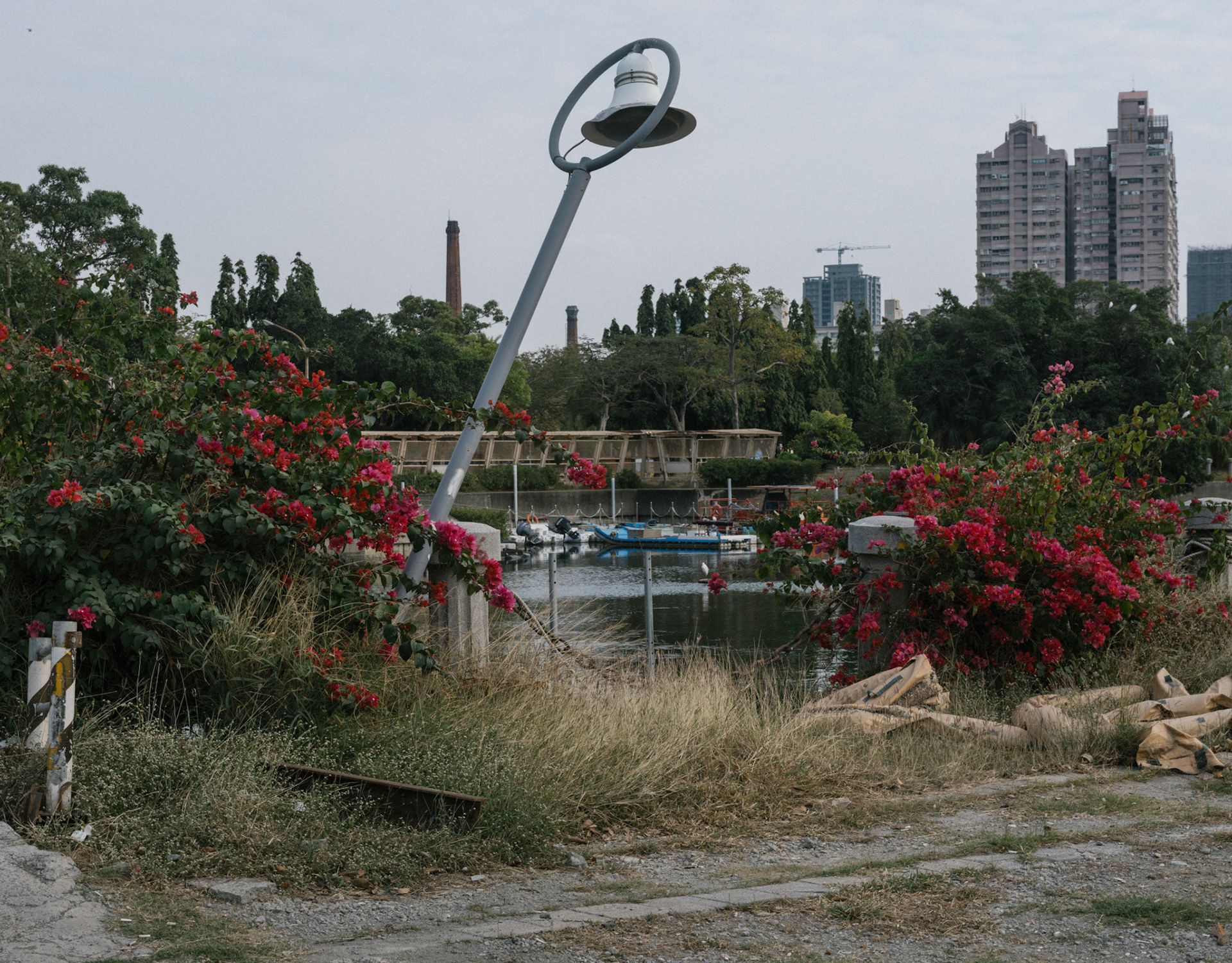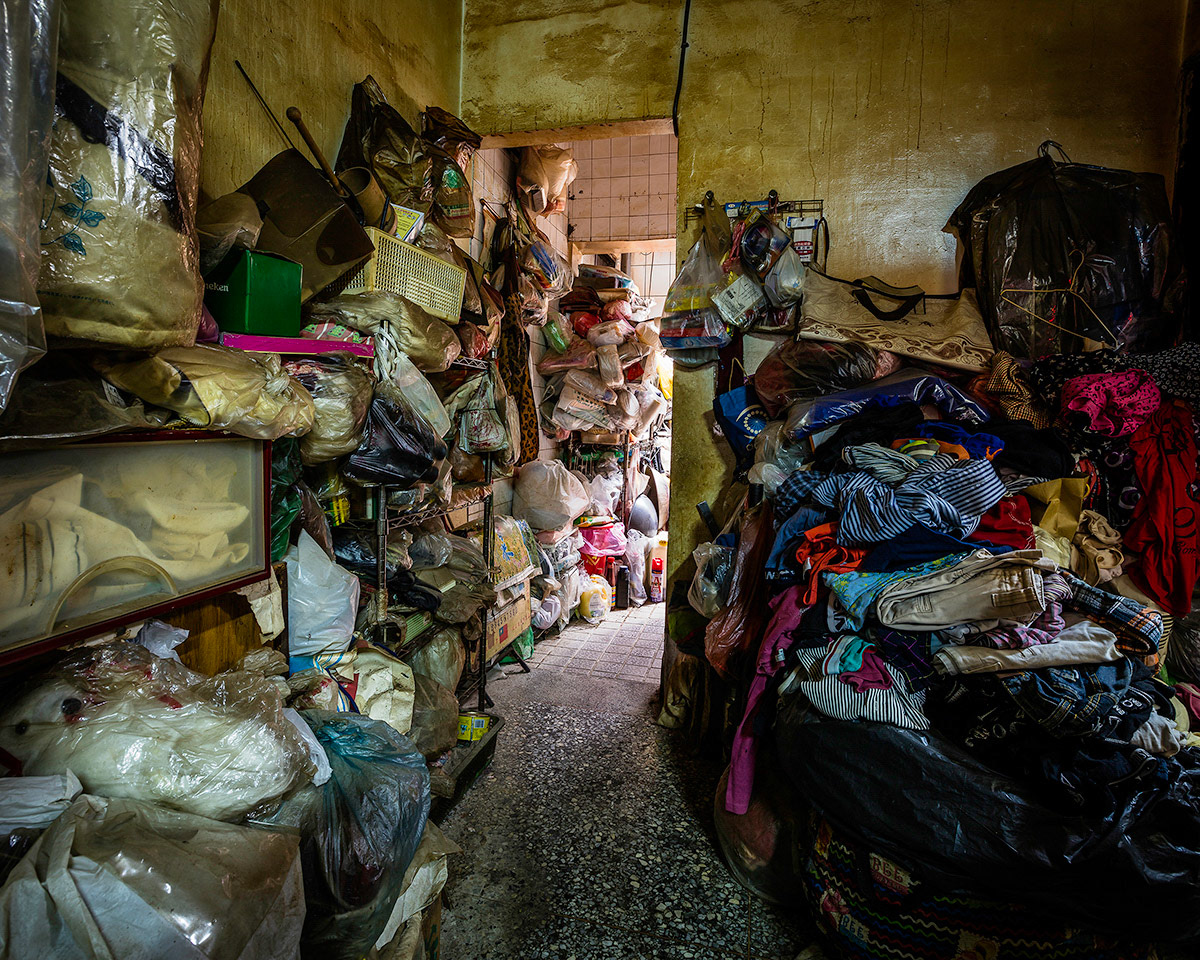
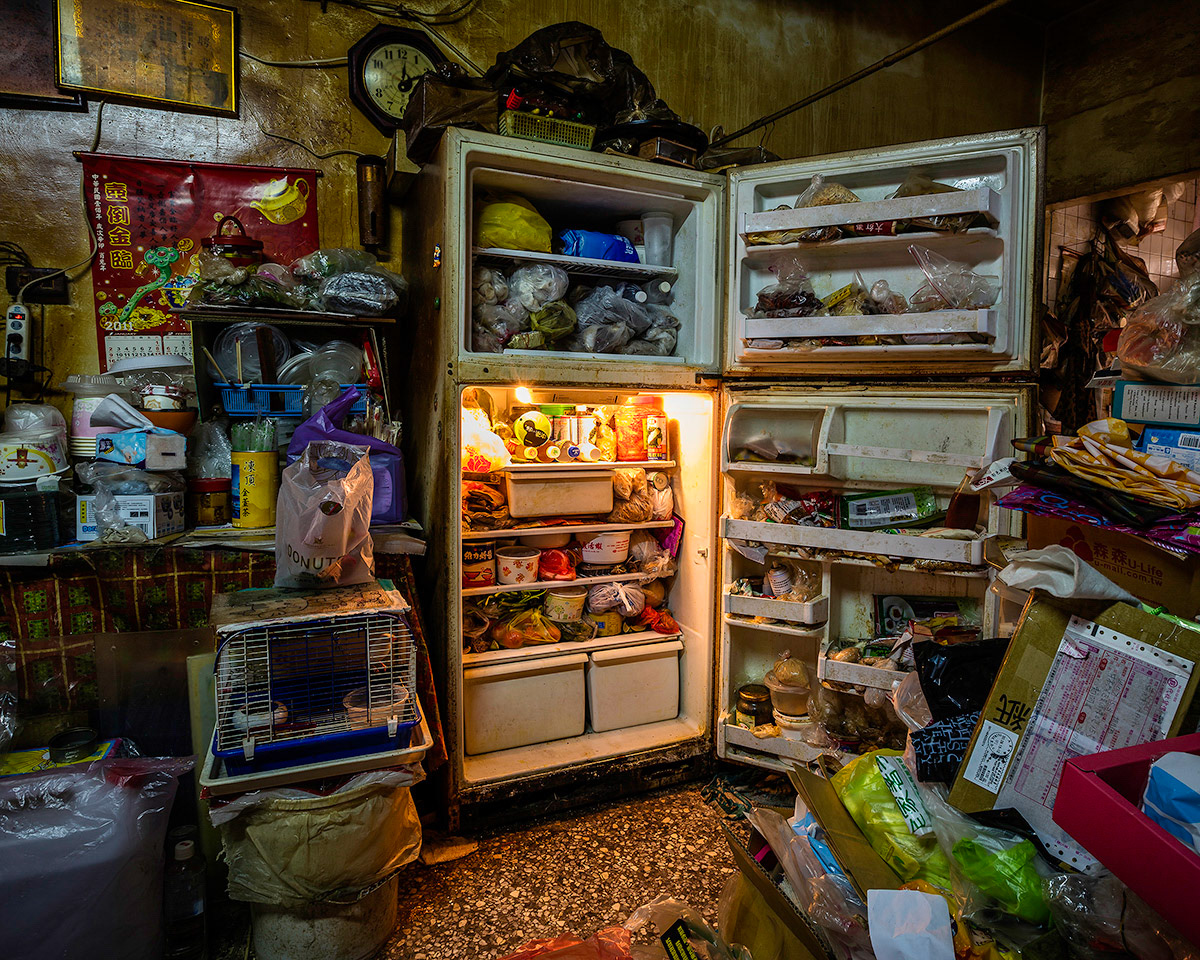
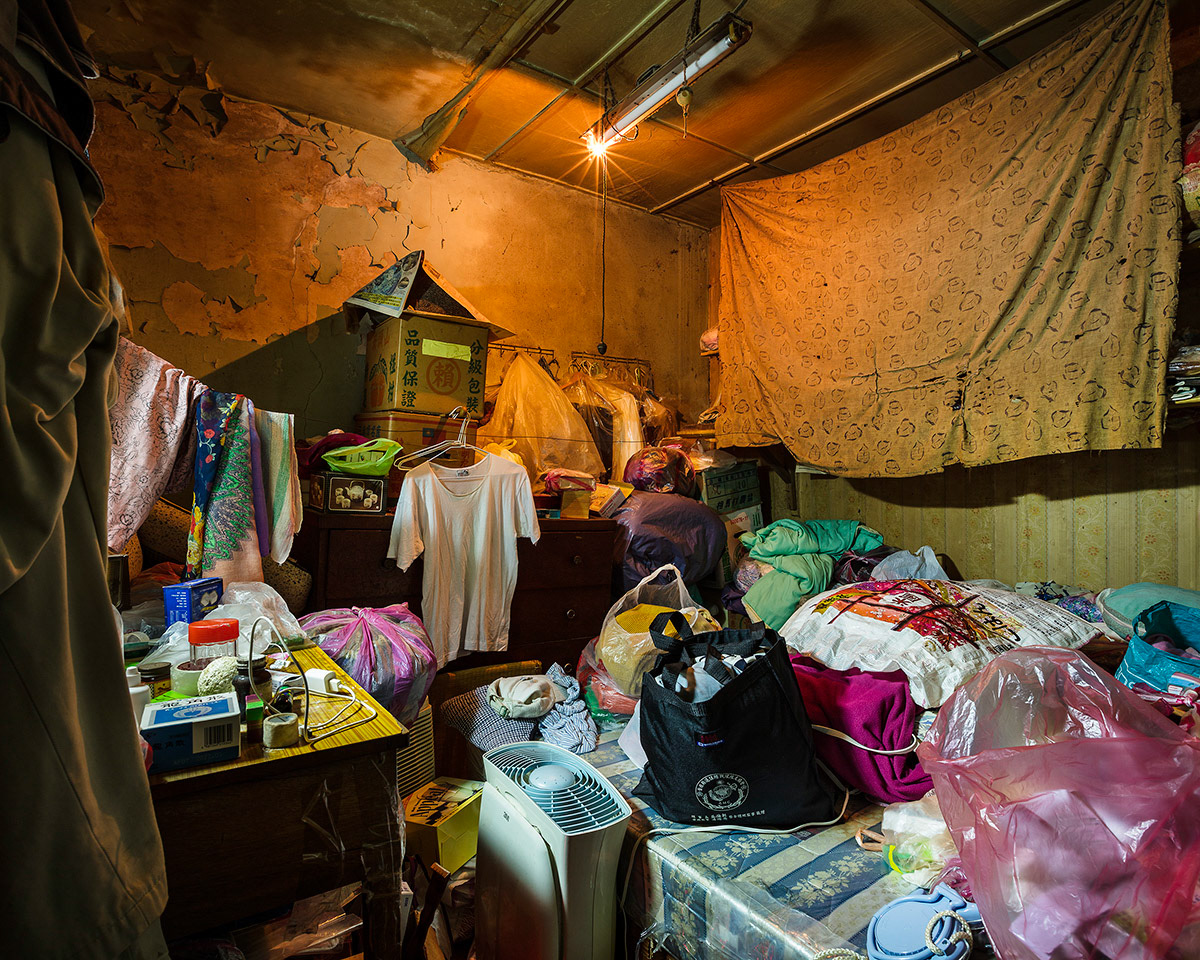
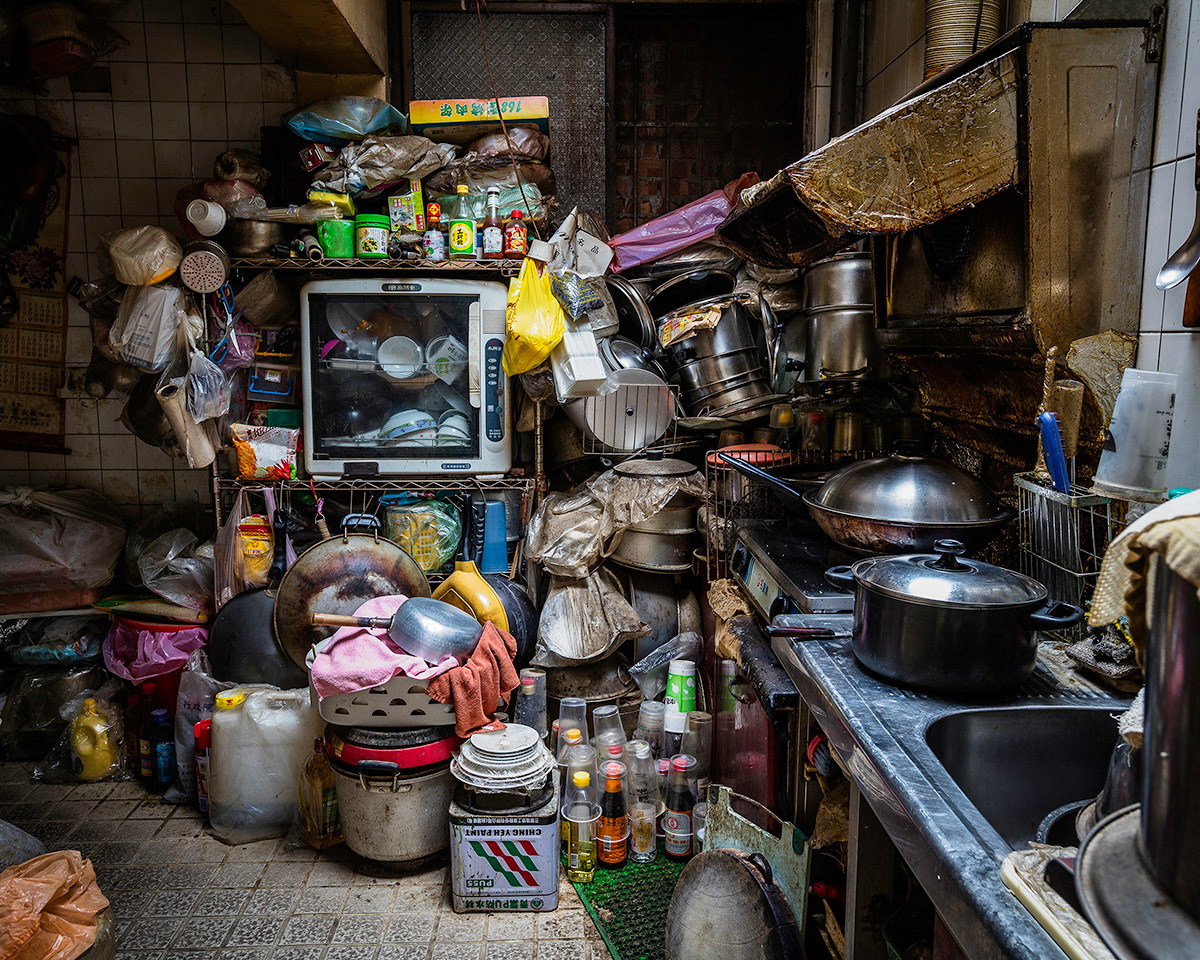
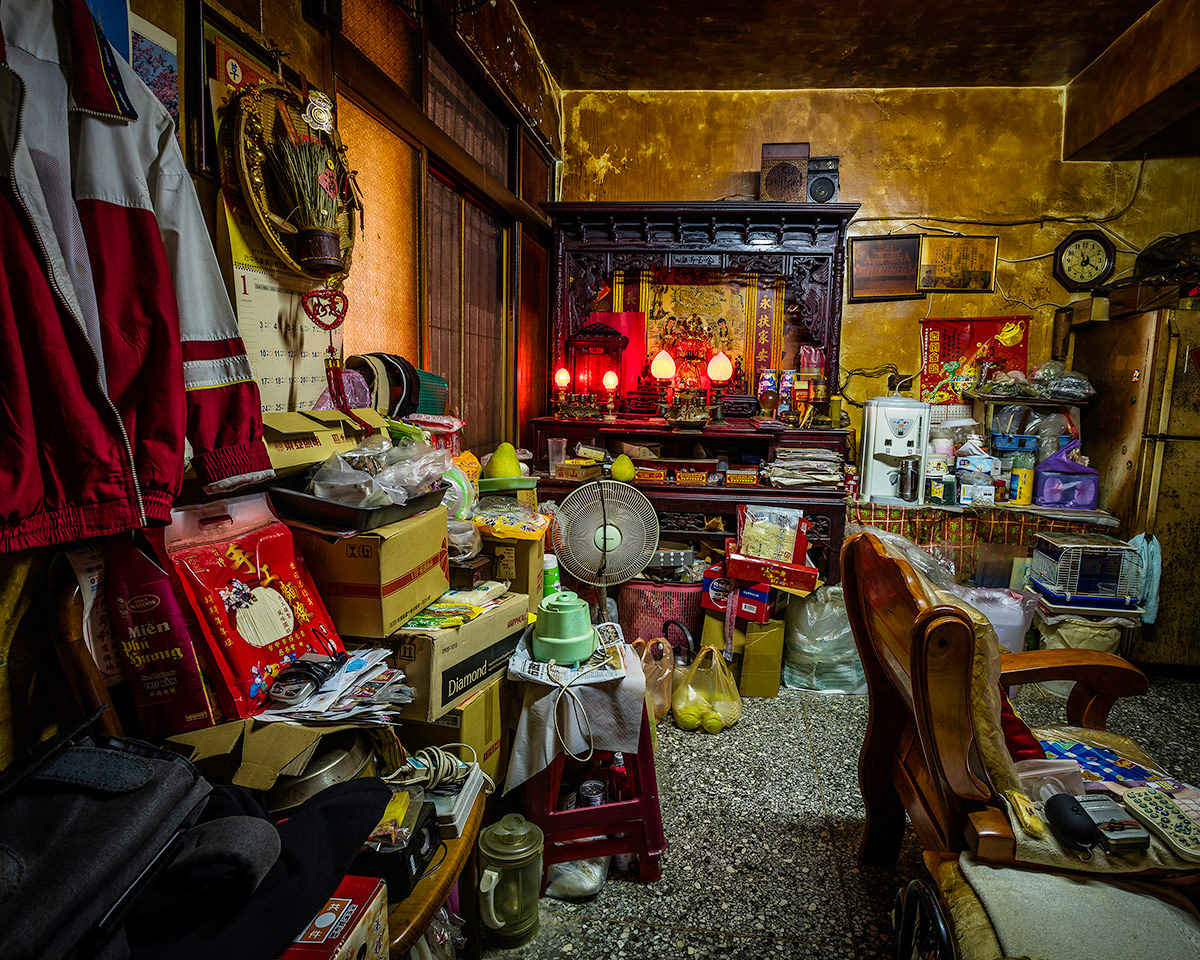
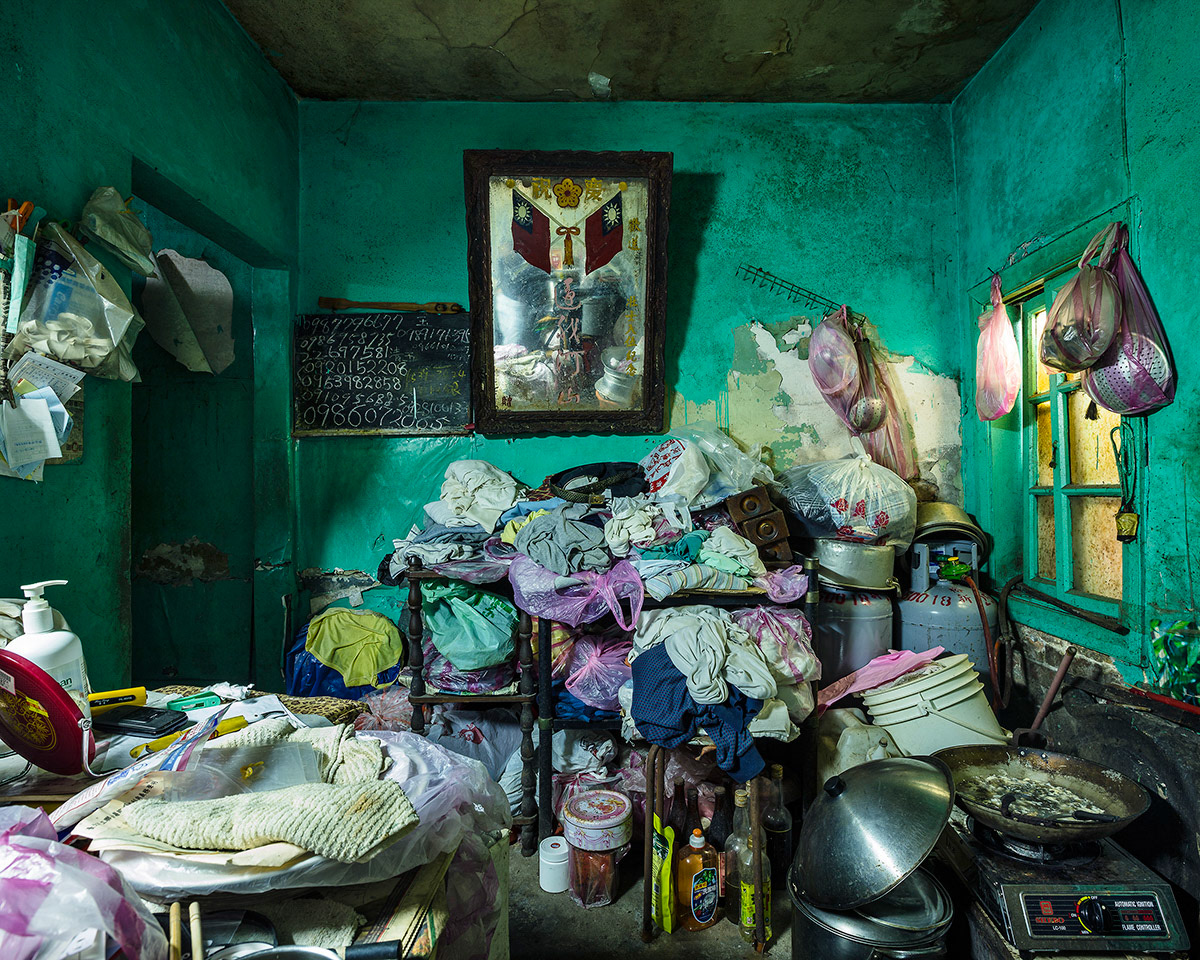
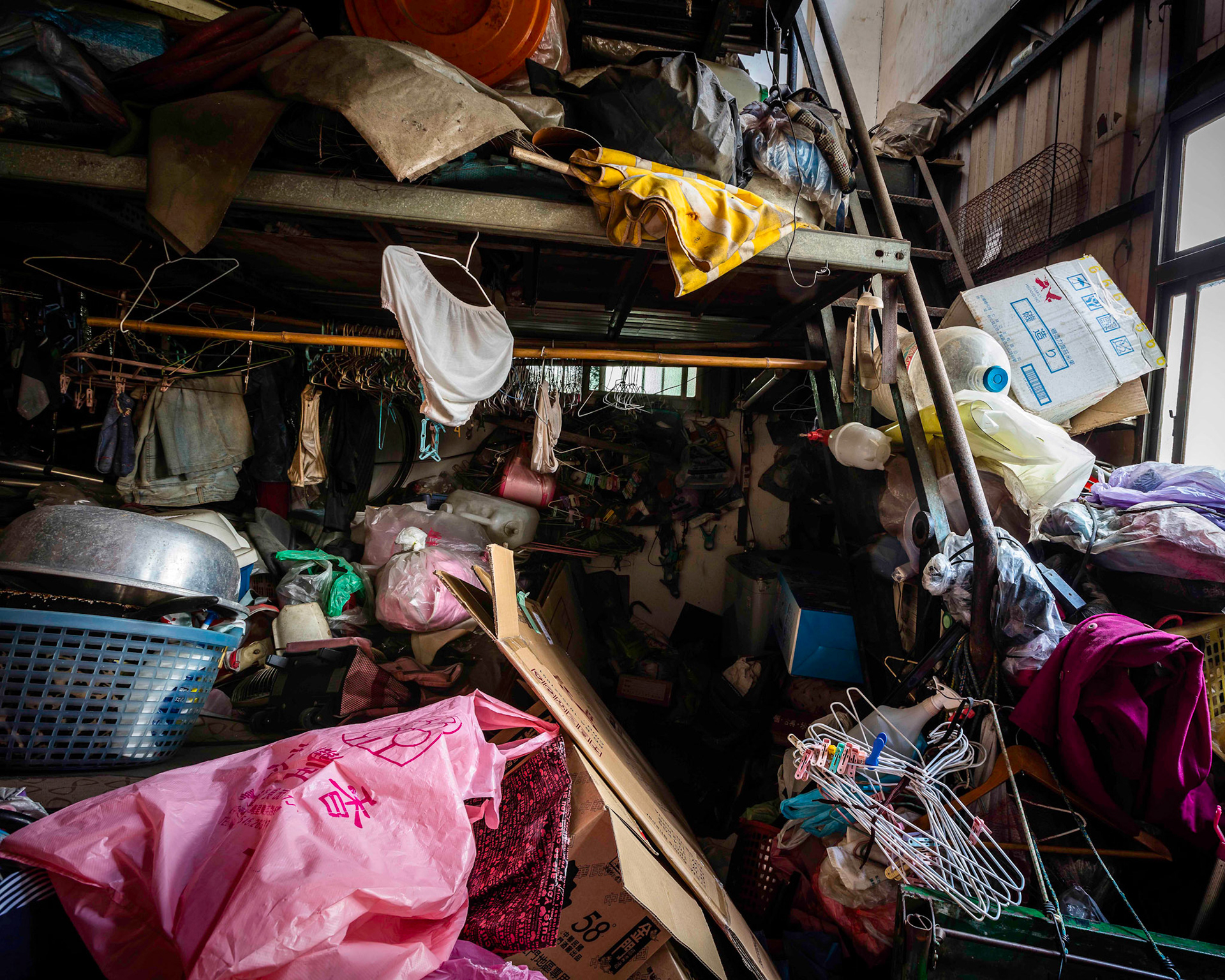
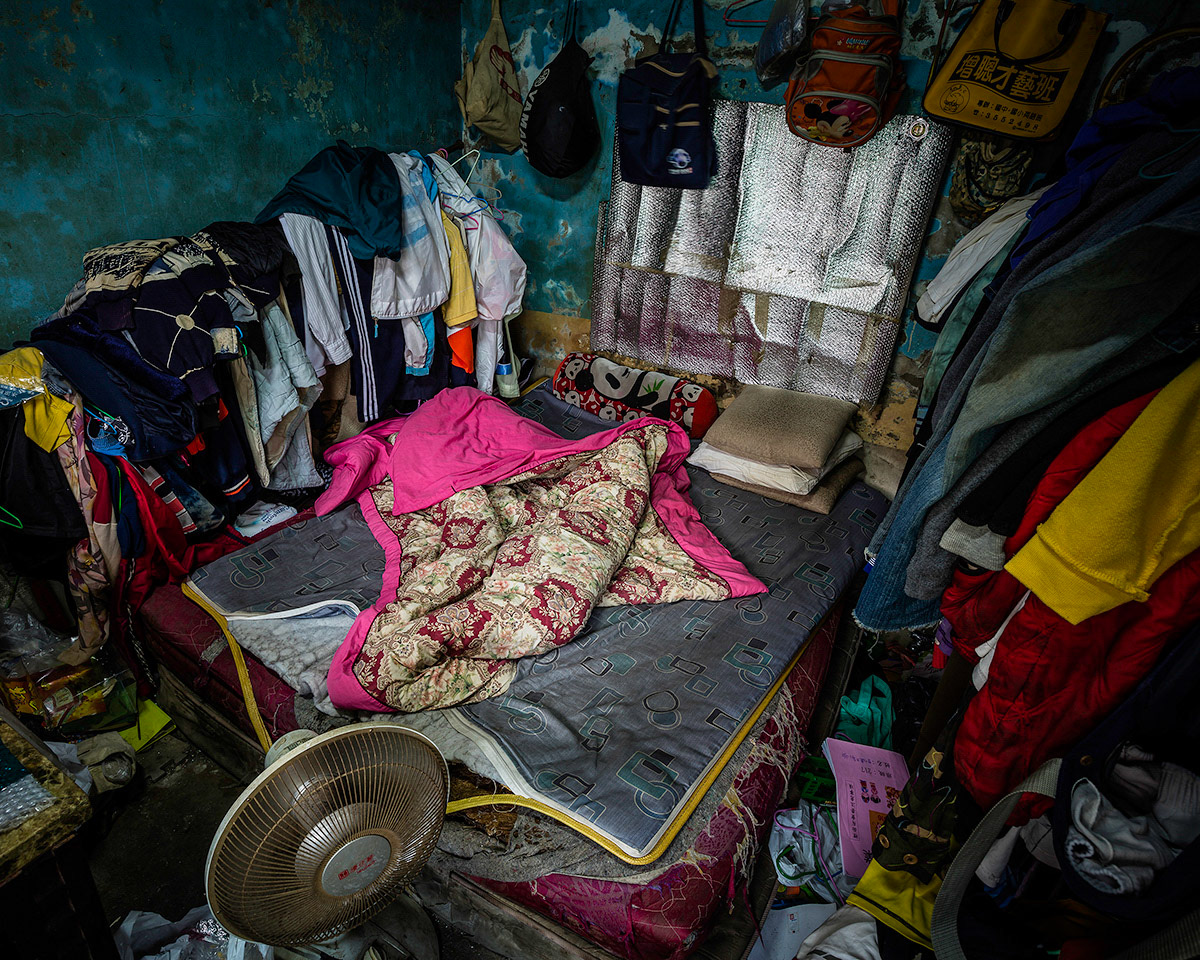
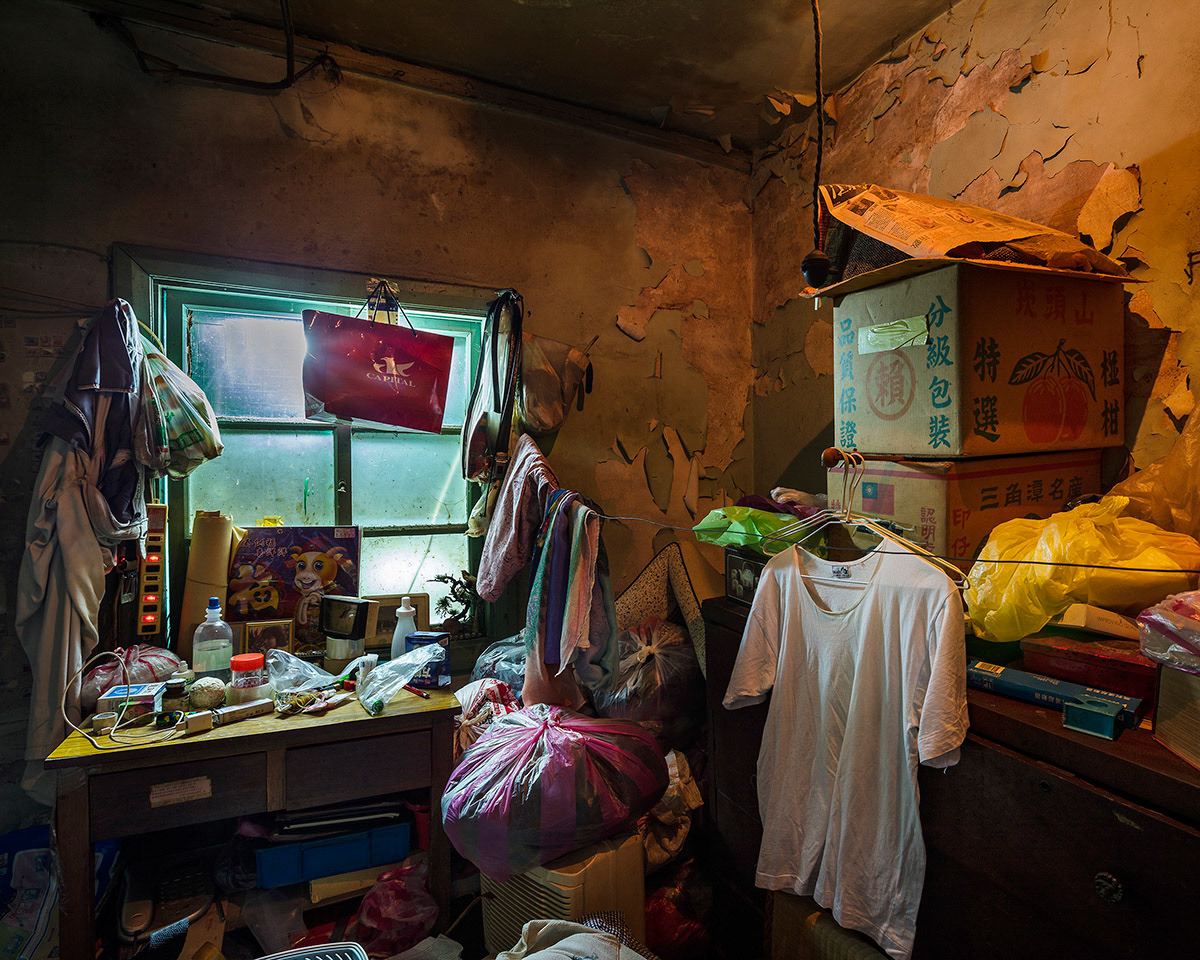
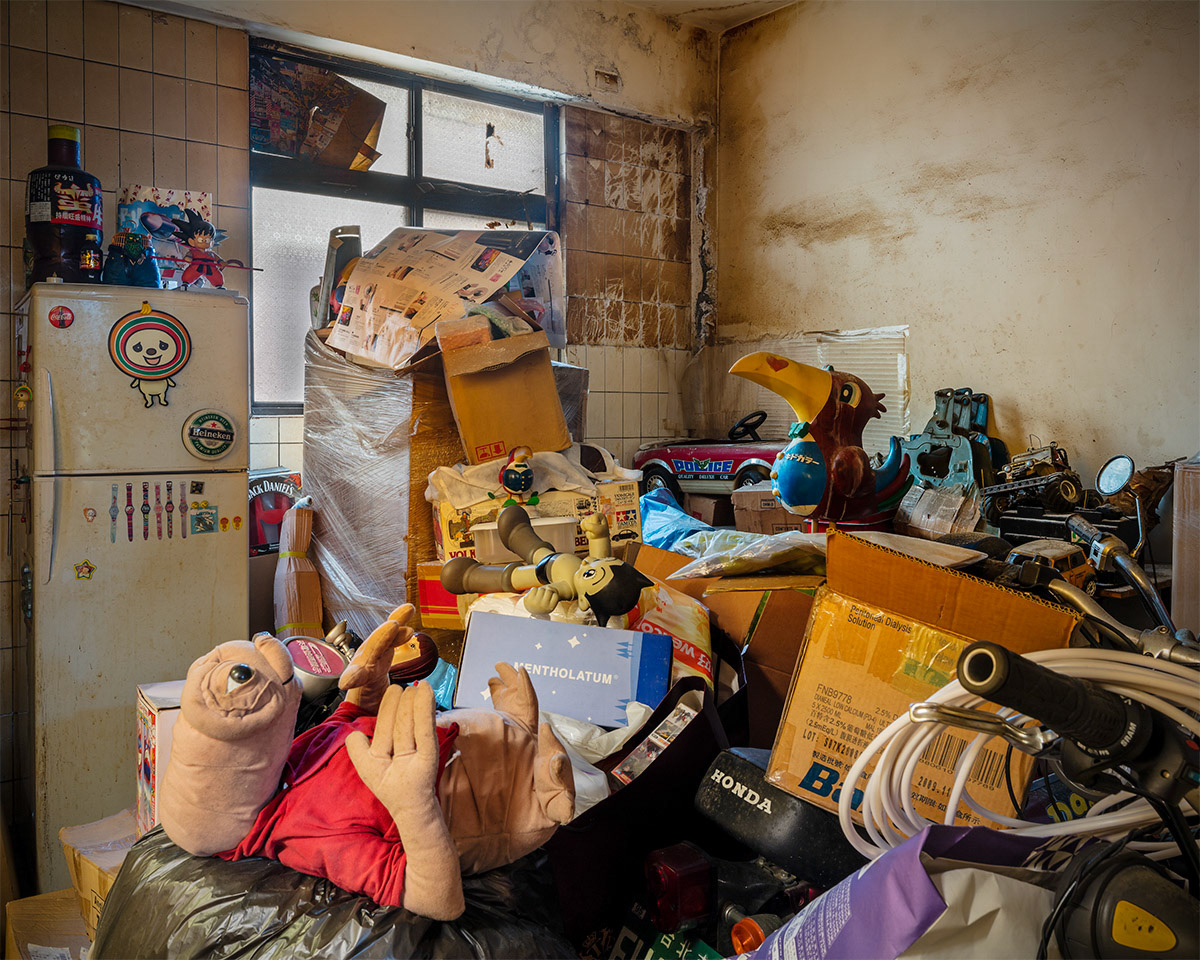
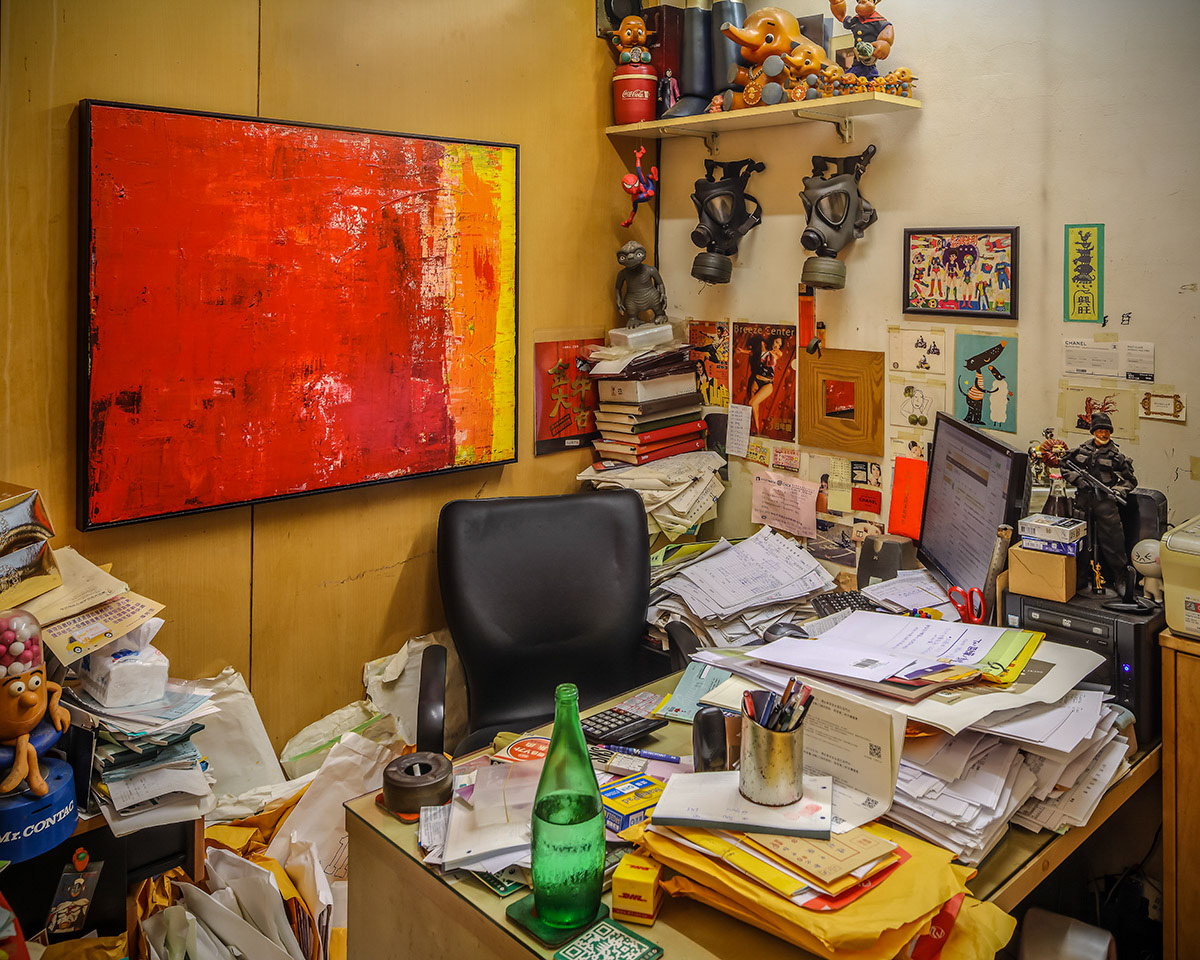
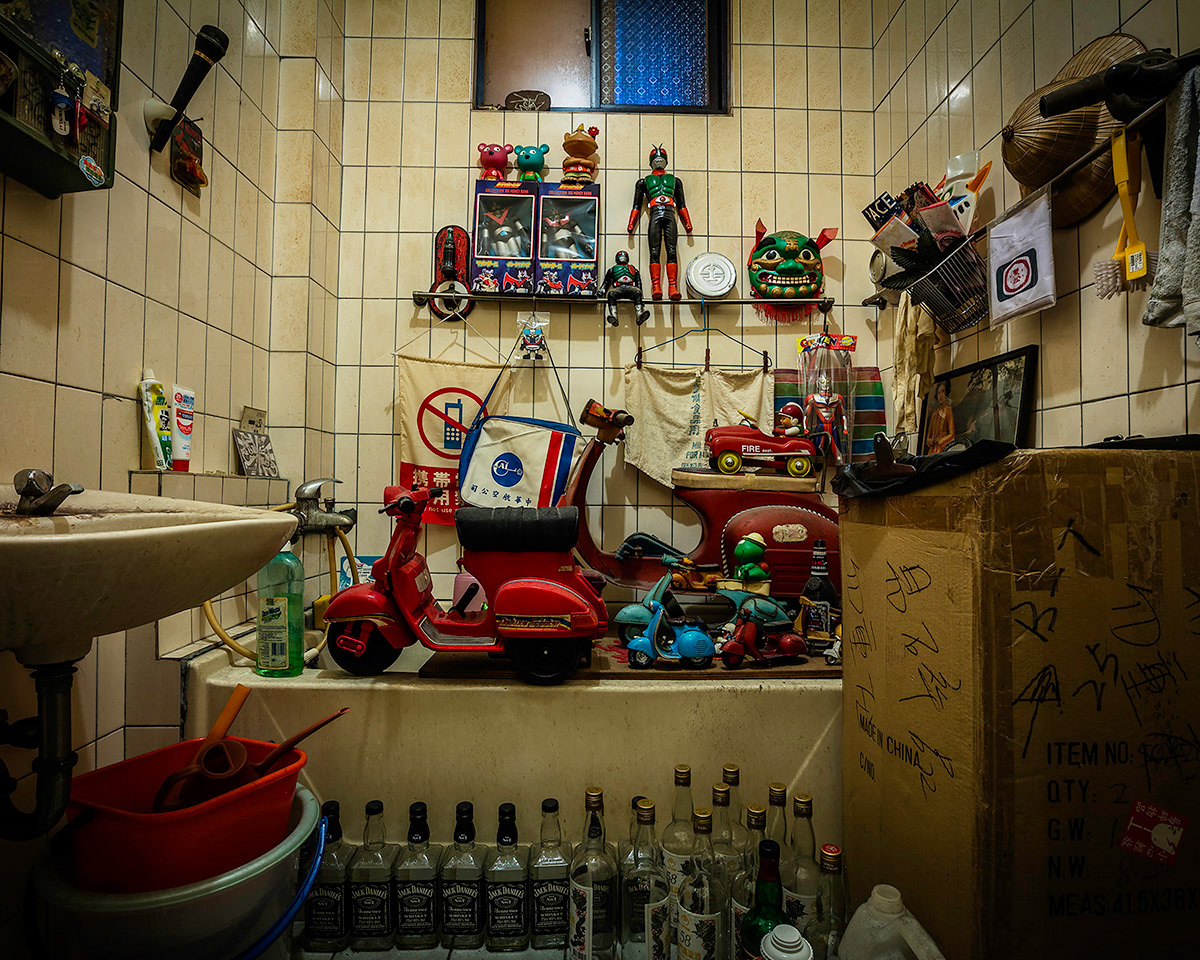
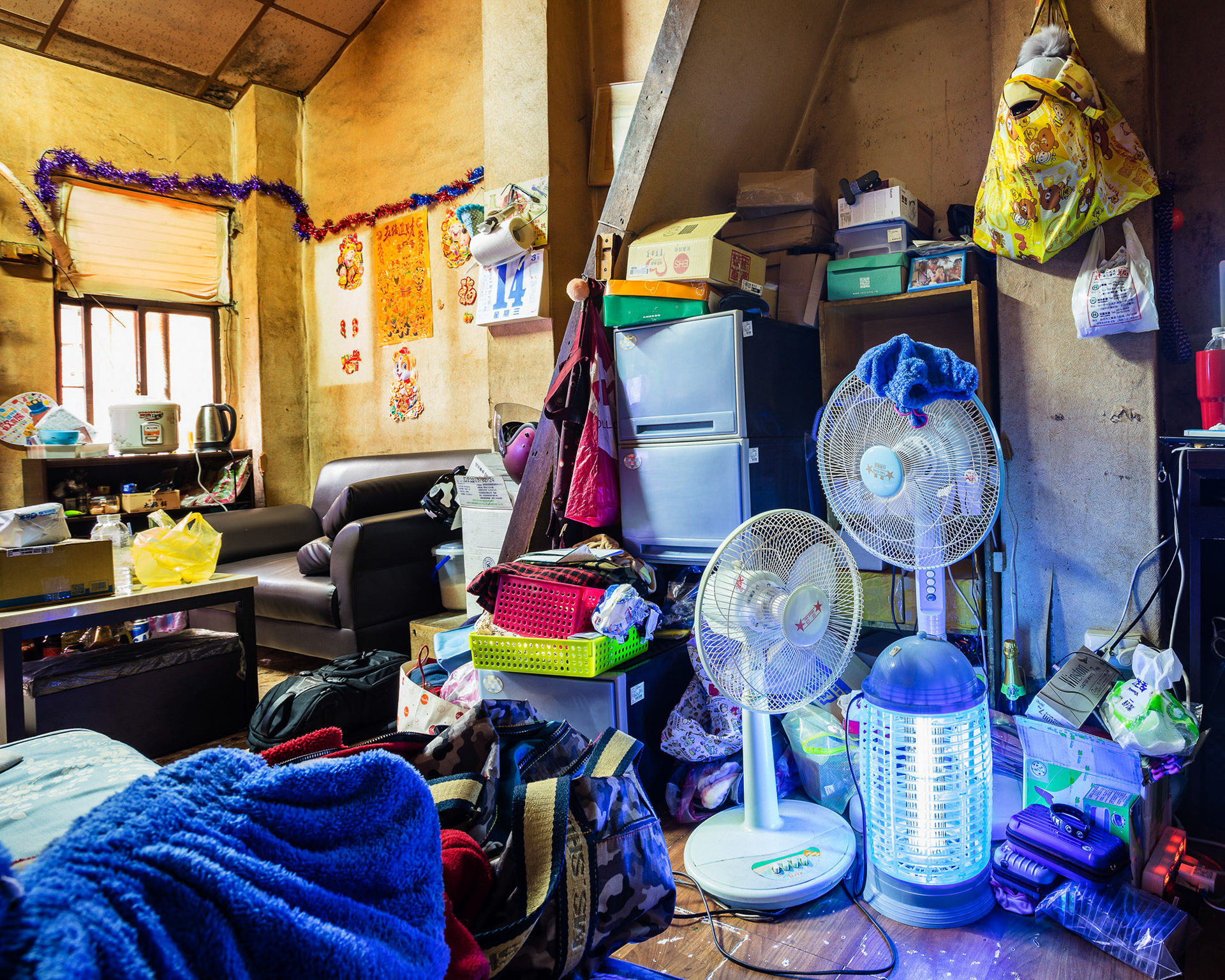
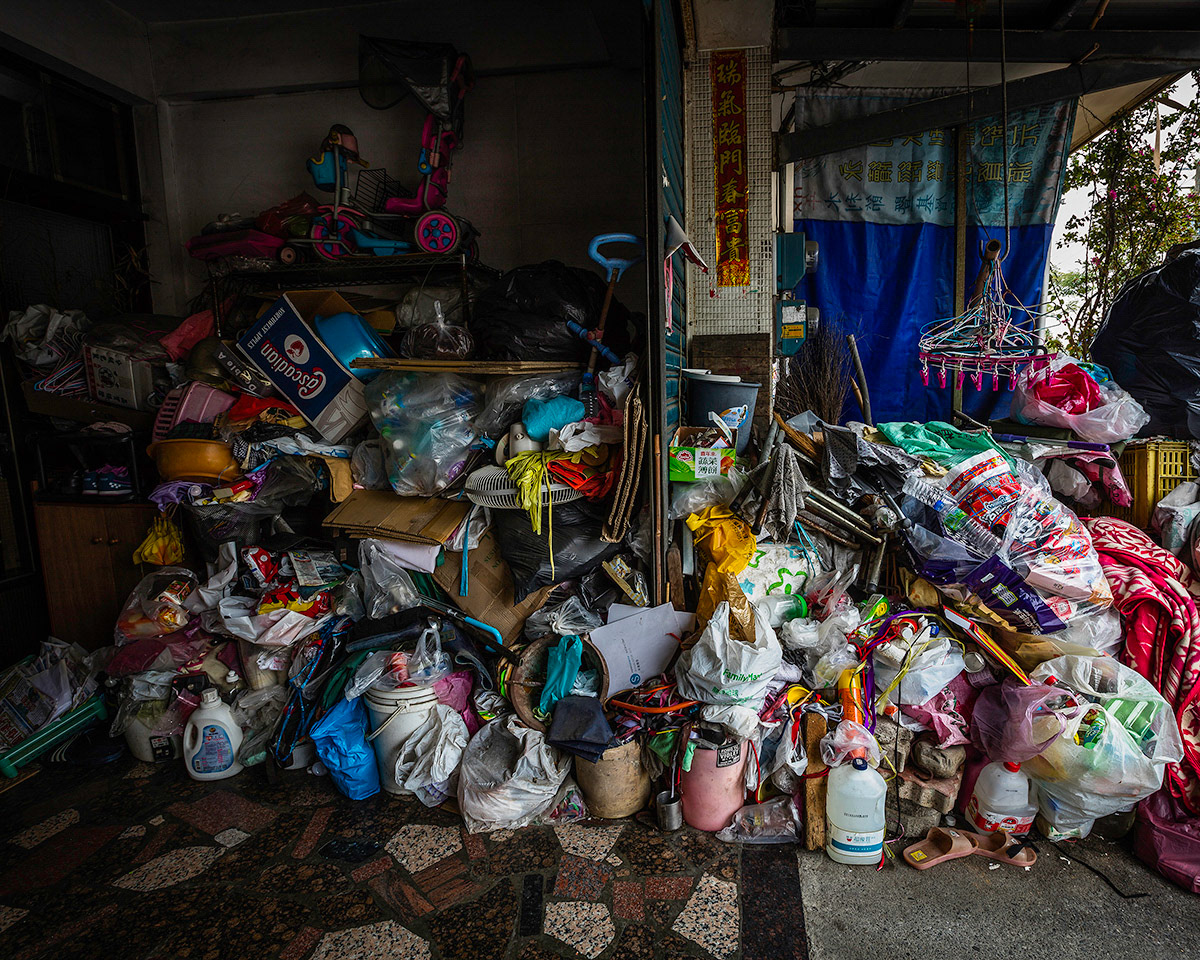
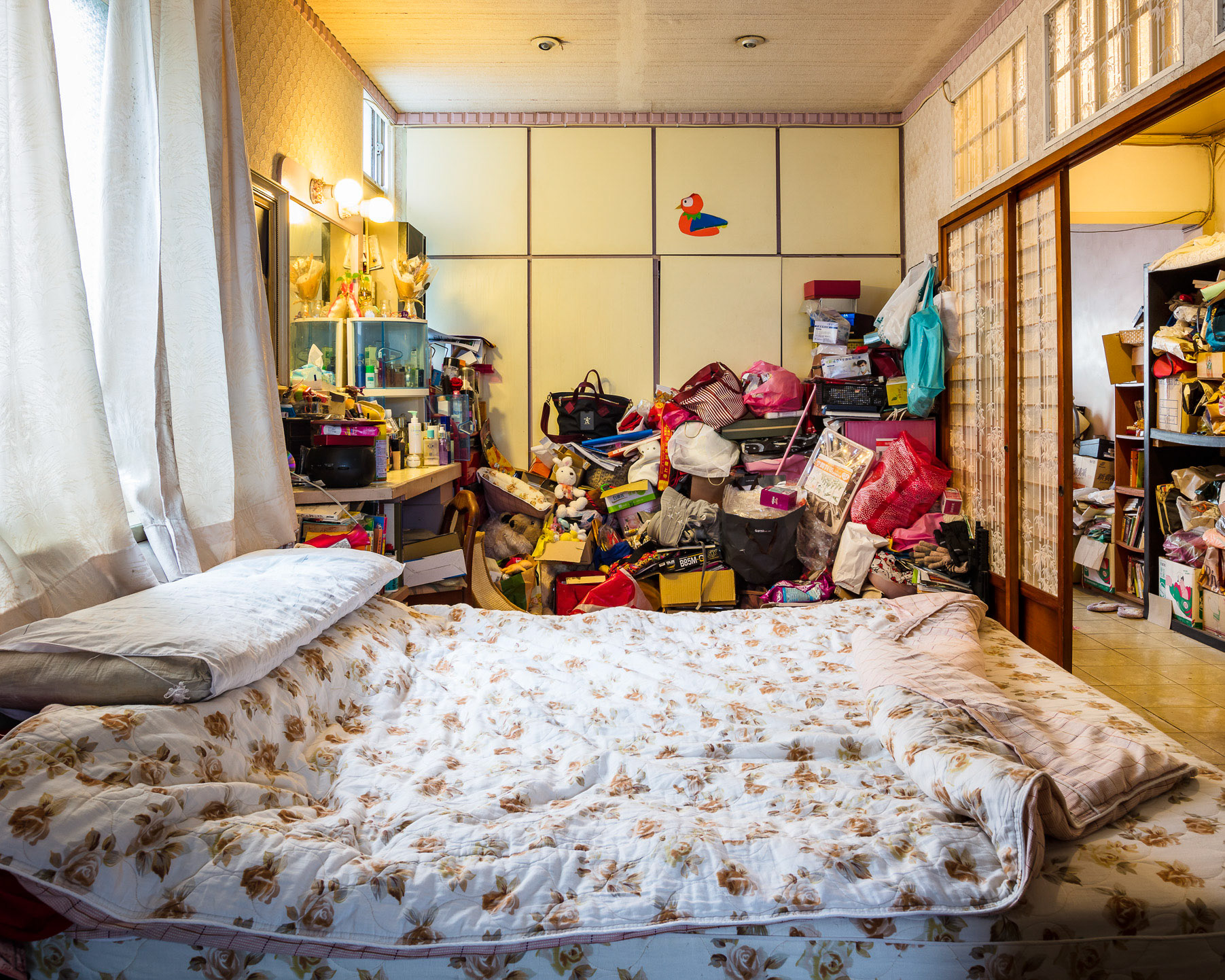
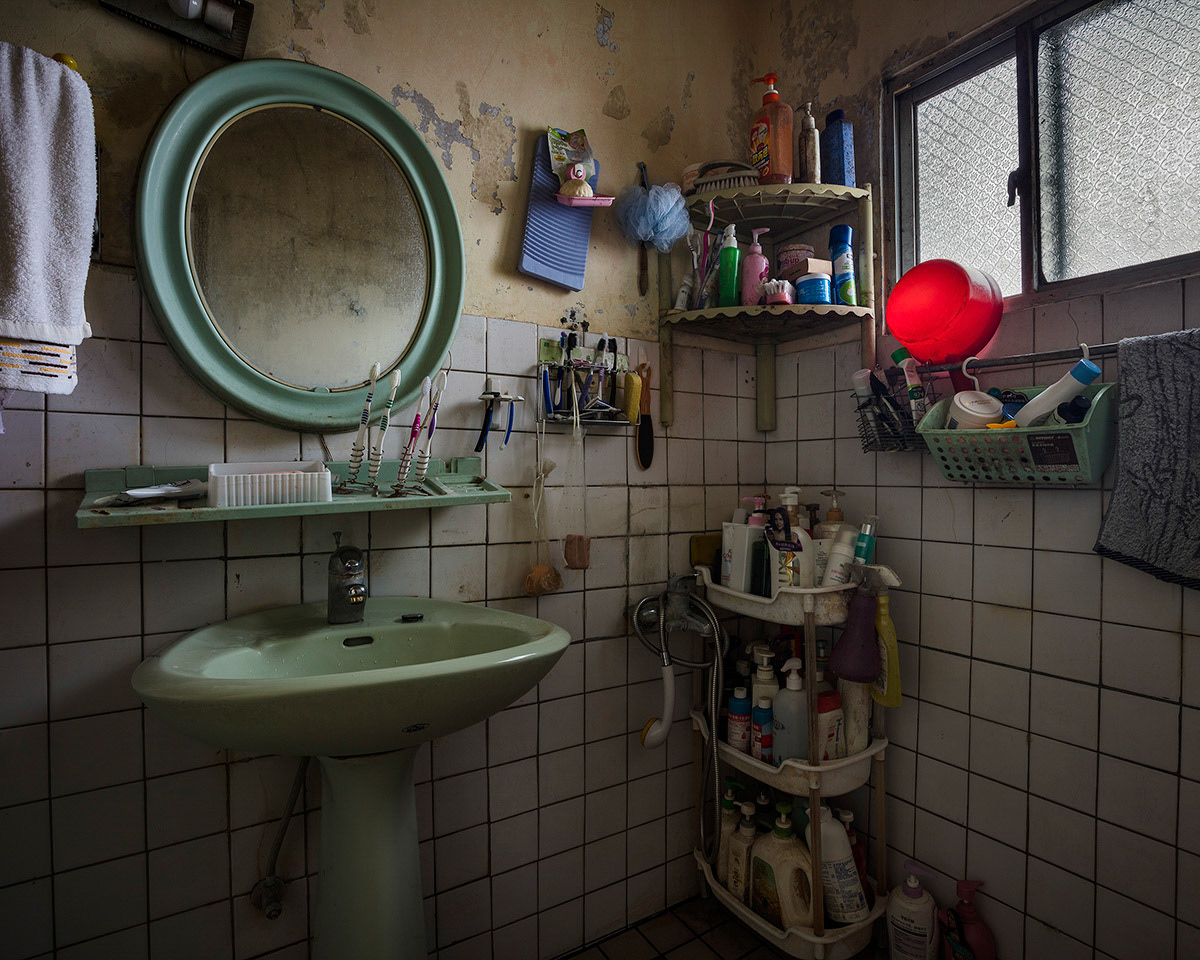
The Hoarders series, initiated in 2016, is the culmination of long-term fieldwork conducted within the living spaces of dozens of hoarders. I seek to use photography as a medium to understand their living conditions and underlying psychological landscapes. In these spaces, accumulated objects cease to be mere clutter and become the physical sediment of one’s lived experience. Through iterative observation and dialogue, I have distilled two core traits: a visceral dread of loss and a profound sense of insecurity. The accumulation of objects functions as a bulwark against uncertainty—an attempt to anchor one's existence and memory. These behaviors rarely arise from conscious intent; rather, they are sedimented over time by the weight of lived experience.
Many hoarders live for years submerged in their possessions. Some have lost the capacity to recognize the gravity of their situation; others find themselves paralyzed by it. This condition not only erodes one’s well-being but also fractures family and community ties, leading to isolation and social rejection. In Taiwan, the media portrayal of hoarding often leans toward sensationalism and othering without understanding the psychological and social contexts, which fuels public misconceptions about "Hoarding Disorder.”
Since the DSM-5 officially recognized Hoarding Disorder in 2013, the condition has entered public discourse. Yet, it remains widely overlooked and rarely met with meaningful support or intervention. Through these images, I seek to challenge prevailing media narratives and invite viewers to rethink the relationship between individuals and their spaces. This project is more than a documentation of hoarding; it is an inquiry into the possibilities of empathy, care, and support. Hoarding is a complex journey etched into both the mind and the space—a journey that demands nuanced understanding and unwavering presence.
《囤積者》系列始於2016年,透過長期的田野拍攝,我進入數十個囤積者的居住空間,試圖以影像理解其生活狀態與背後的心理狀態。這些空間不僅是物品堆積的結果,更是個體生命經驗的具體顯現。 在反覆的觀察與訪談之中,我逐漸歸納出兩個核心特質:對失去的極度恐懼,以及深層的不安全感。物品的累積,成為一種對抗不確定性的方式,也是一種試圖維繫自身存在與記憶的行動。這些選擇往往並非出於自覺,而是在漫長的生命經驗中逐步形成。
許多囤積者長期生活於被物品包圍的環境中,有些人已無法意識到問題的存在,有些則對自身狀態感到無力。這樣的生活不僅影響個人的身心狀態,也逐漸波及家庭關係與鄰里互動,導致疏離甚至排斥。然而,在台灣,媒體對於囤積現象多以獵奇或異化的方式呈現,缺乏對其心理與社會脈絡的理解,使得大眾對「囤積症」產生偏差的想像。
自2013年《精神疾病診斷與統計手冊》第五版(Diagnostic and Statistical Manual of Mental Disorders (DSM-5))將囤積症正式列為精神疾病以來,相關討論逐漸增加,但在實際社會中,這仍是一個被忽視且難以介入的狀態。 透過影像,我嘗試建立一種不同於既有媒體敘事的觀看方式,讓觀者得以重新思考這些空間與個體之間的關係。這不僅是對囤積現象的記錄,更是一種對理解、關懷與支持可能性的提問。囤積者的處境,無論在心理層面或是居住空間的表象,都是一項複雜且長期的過程,也因此需要更細緻且持續的理解與回應。