Tracing the Edge of Places
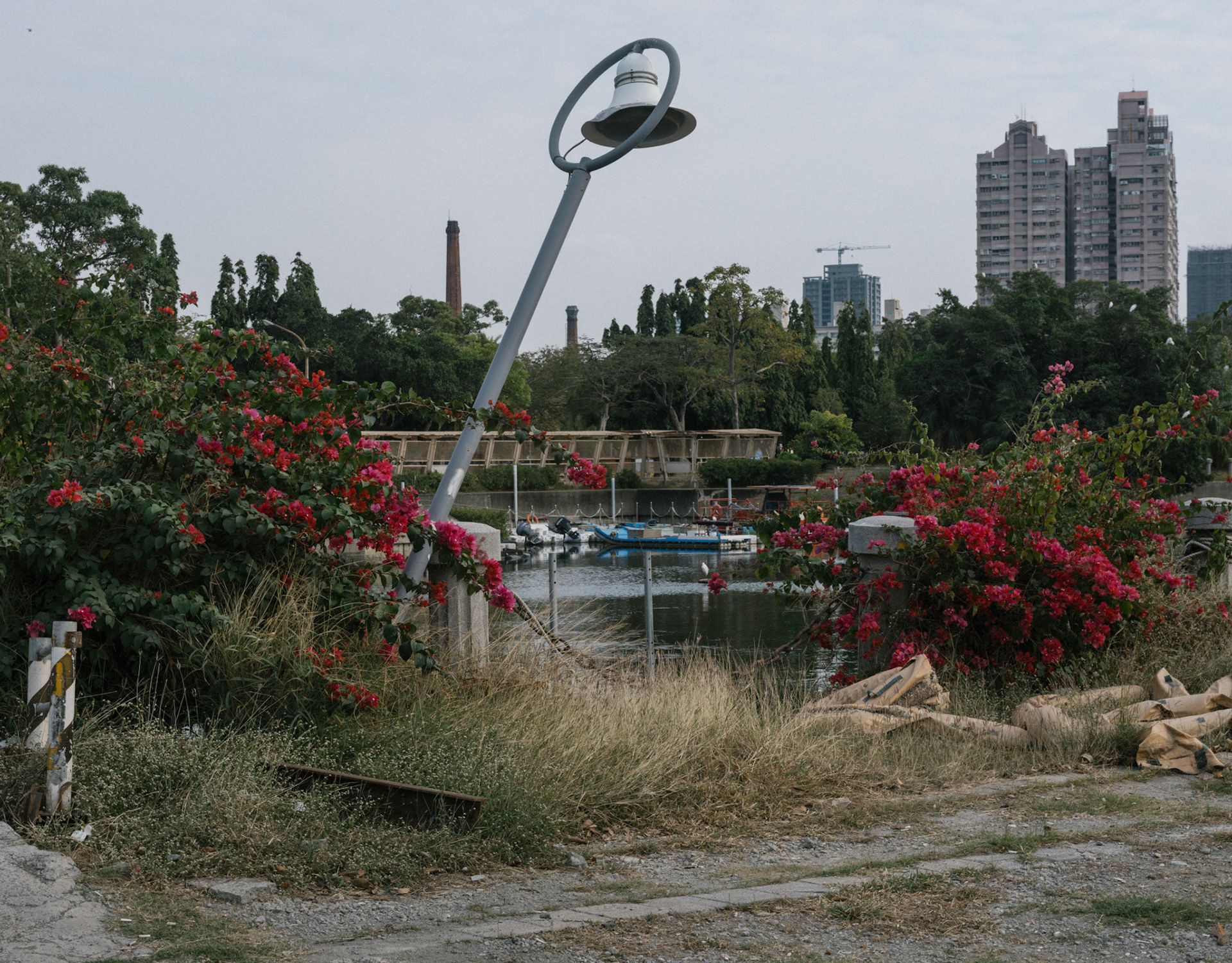
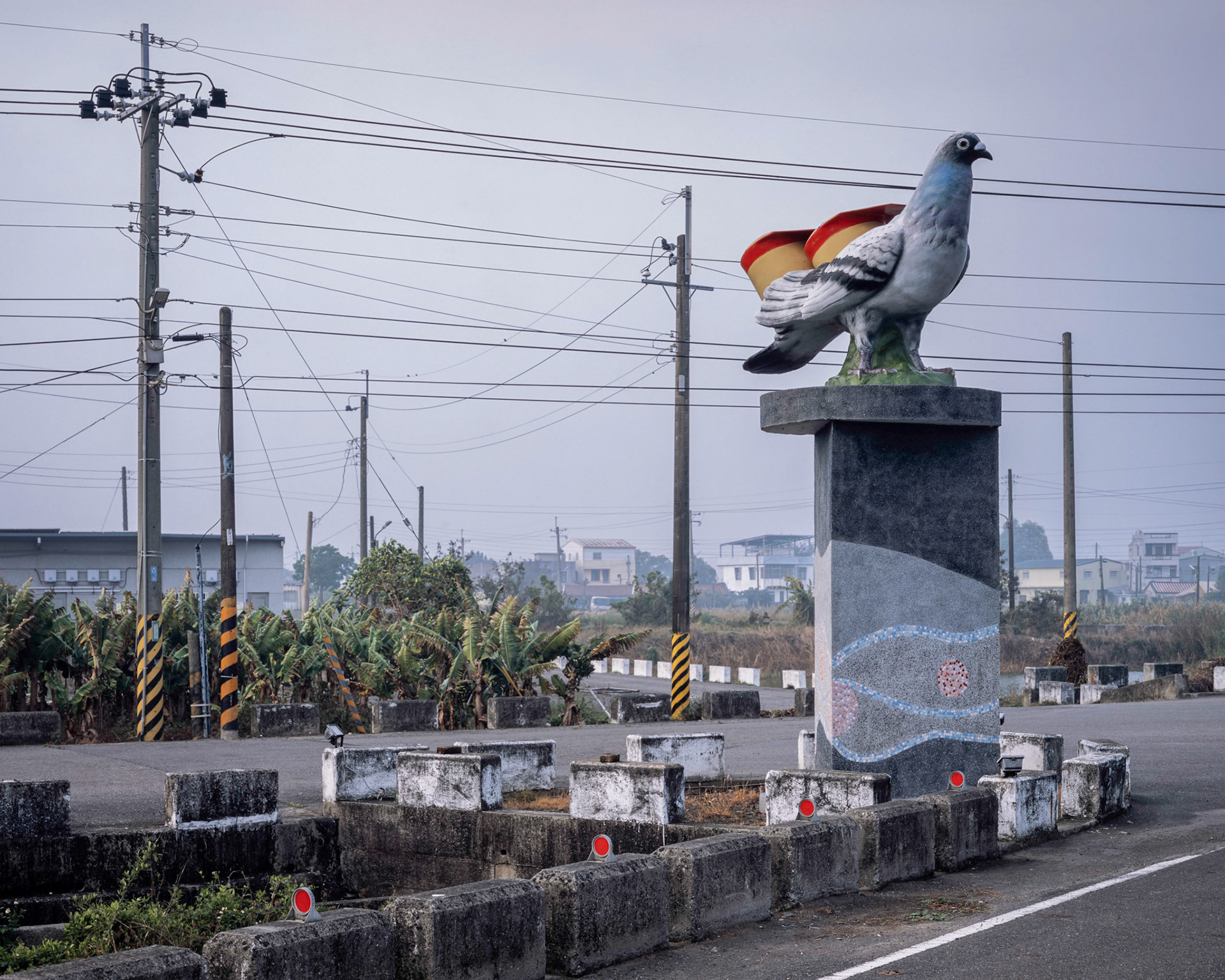
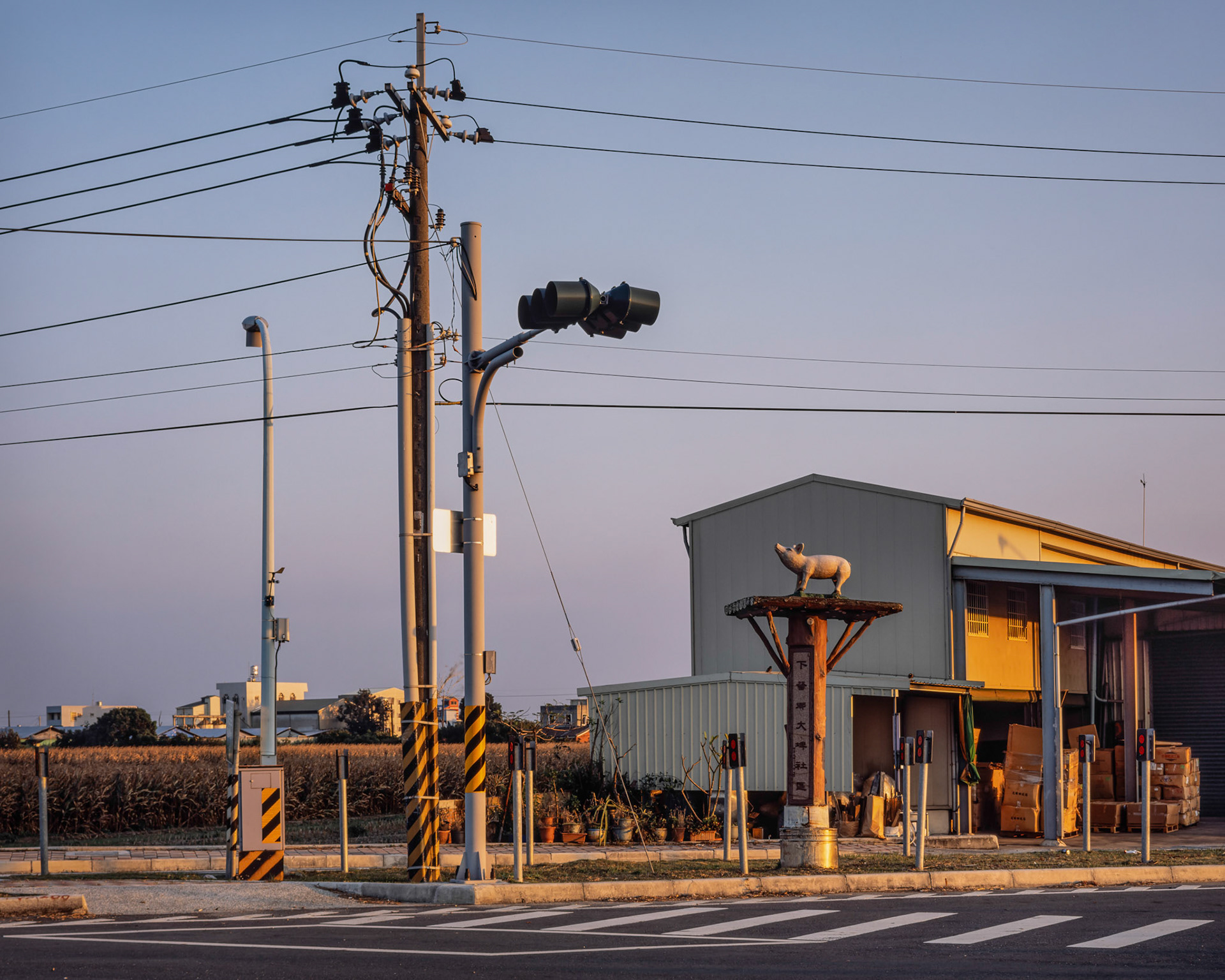
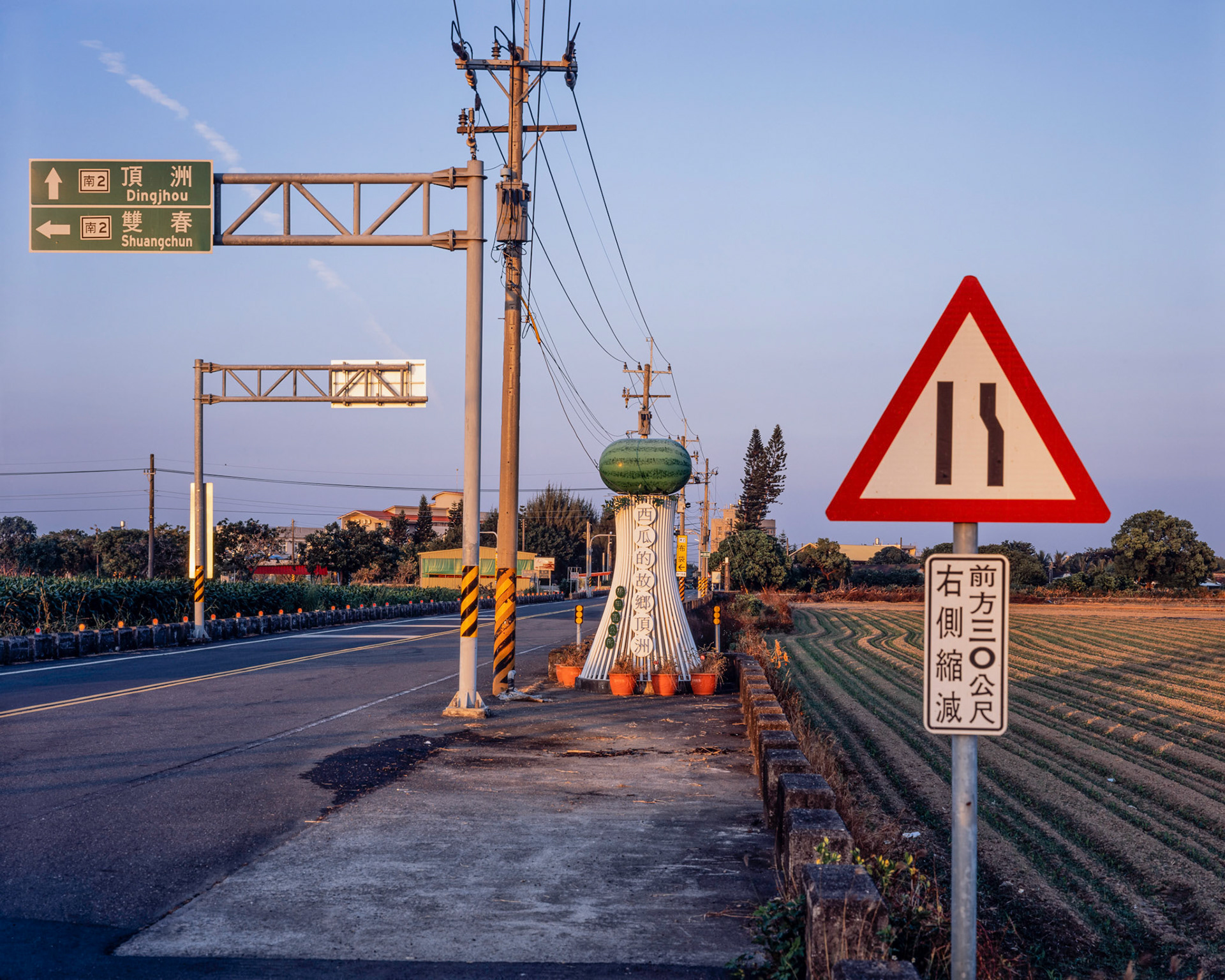
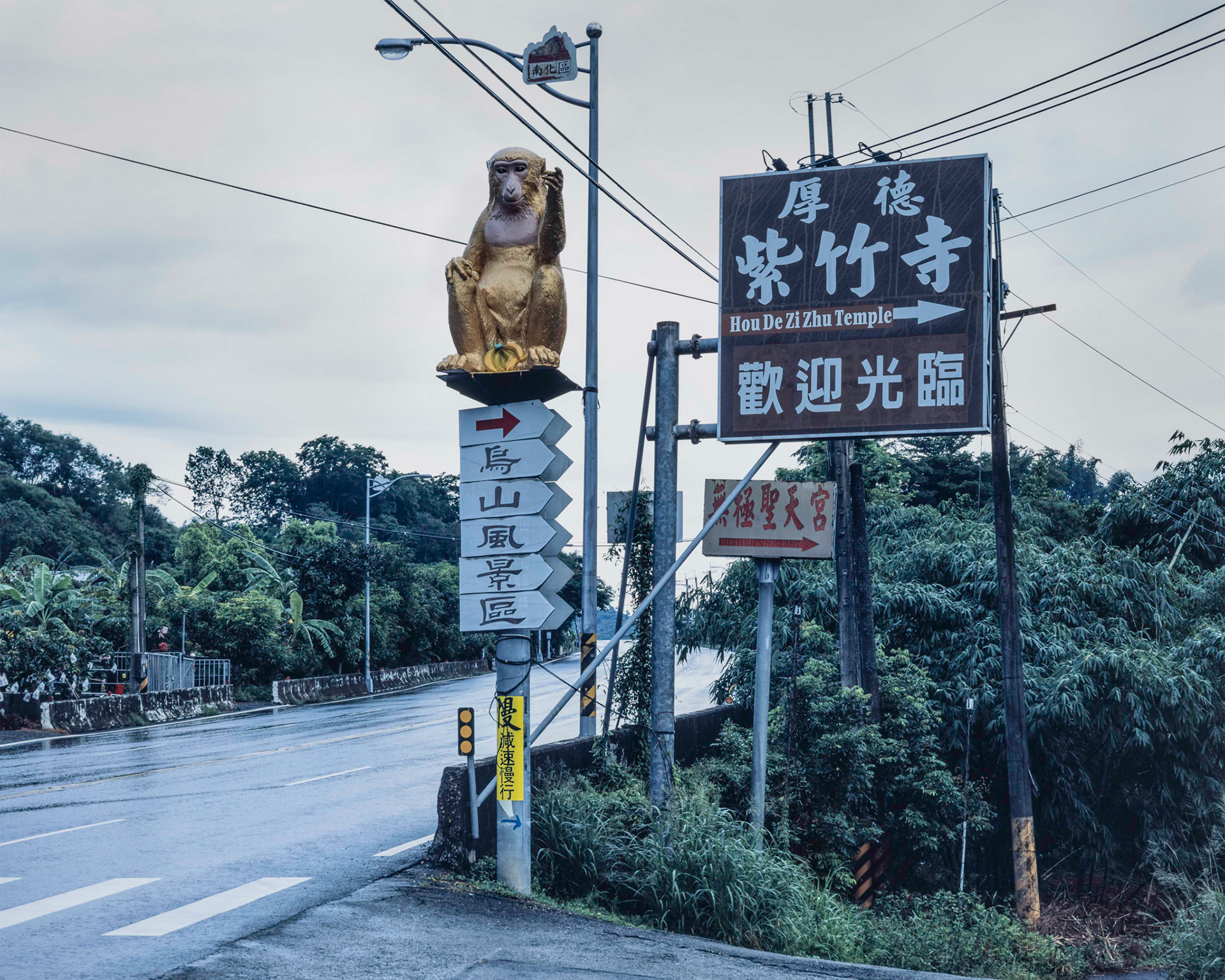
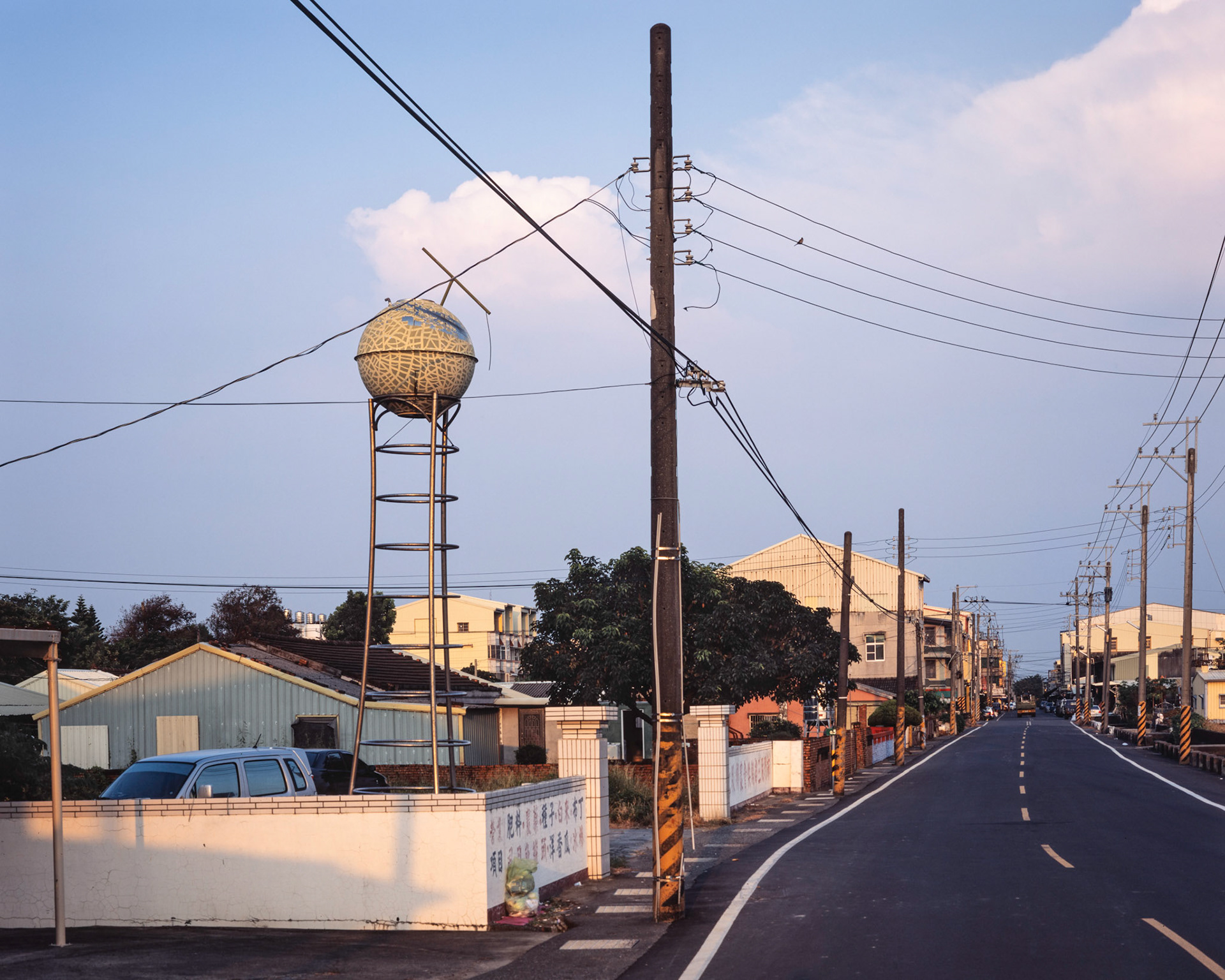
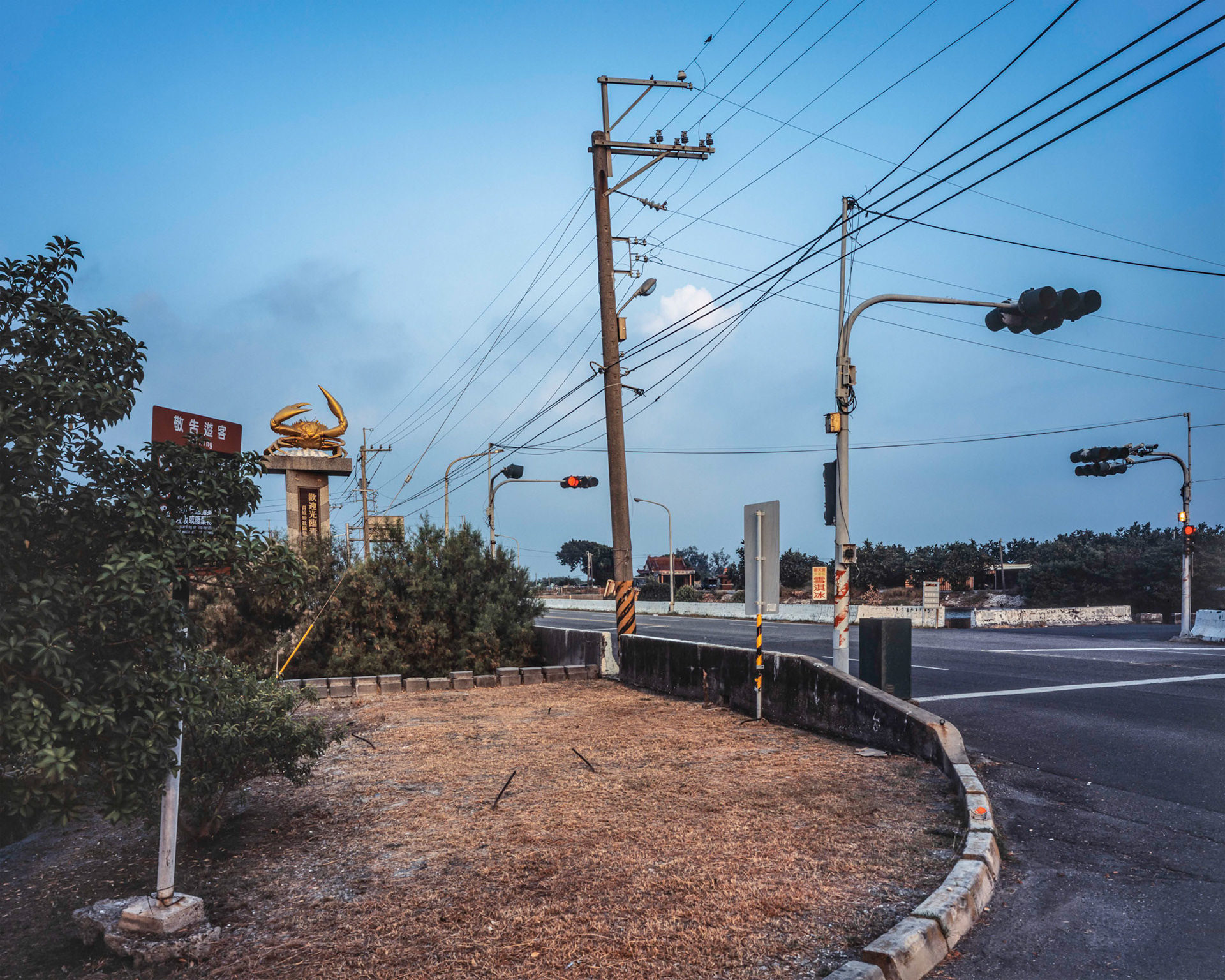
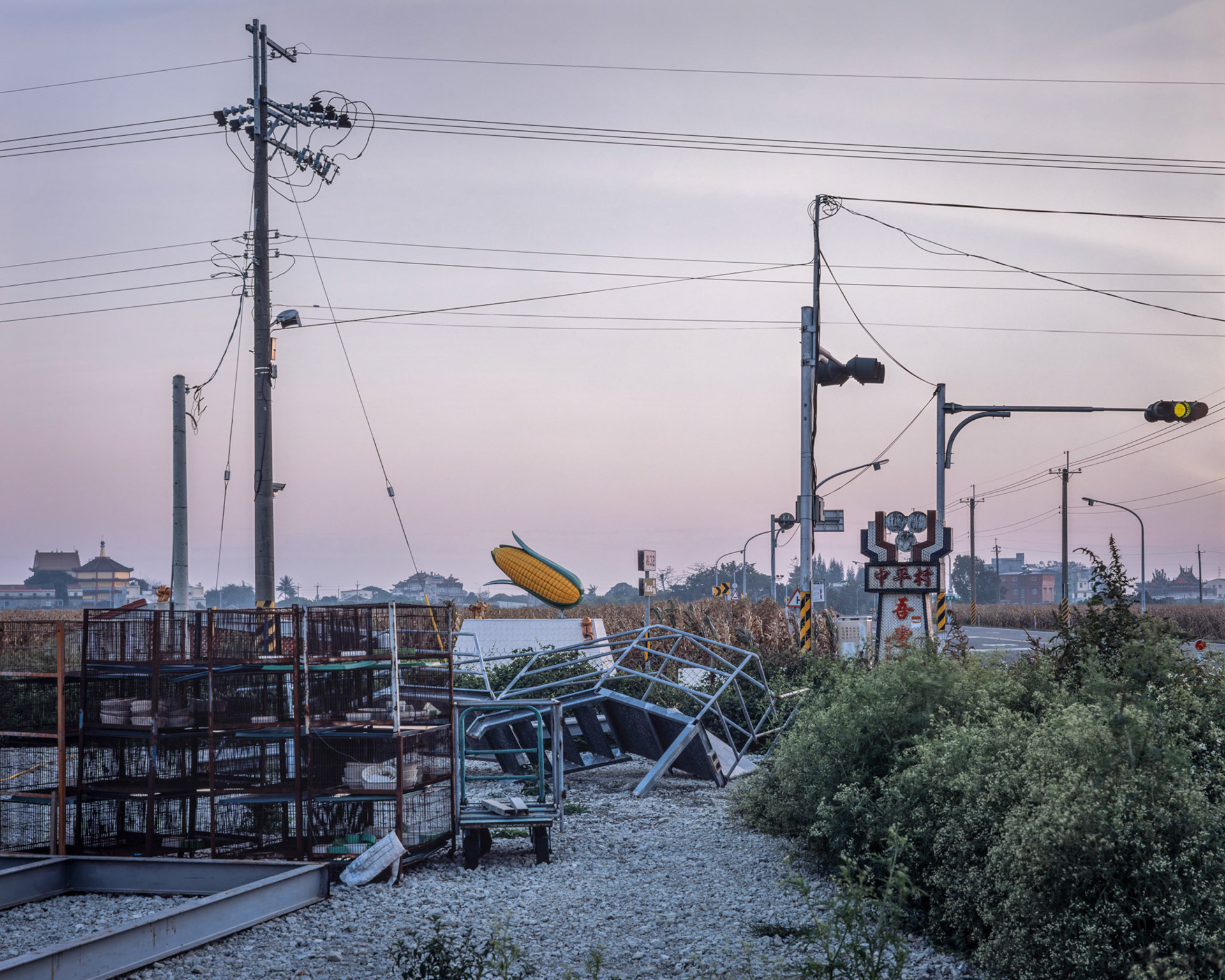
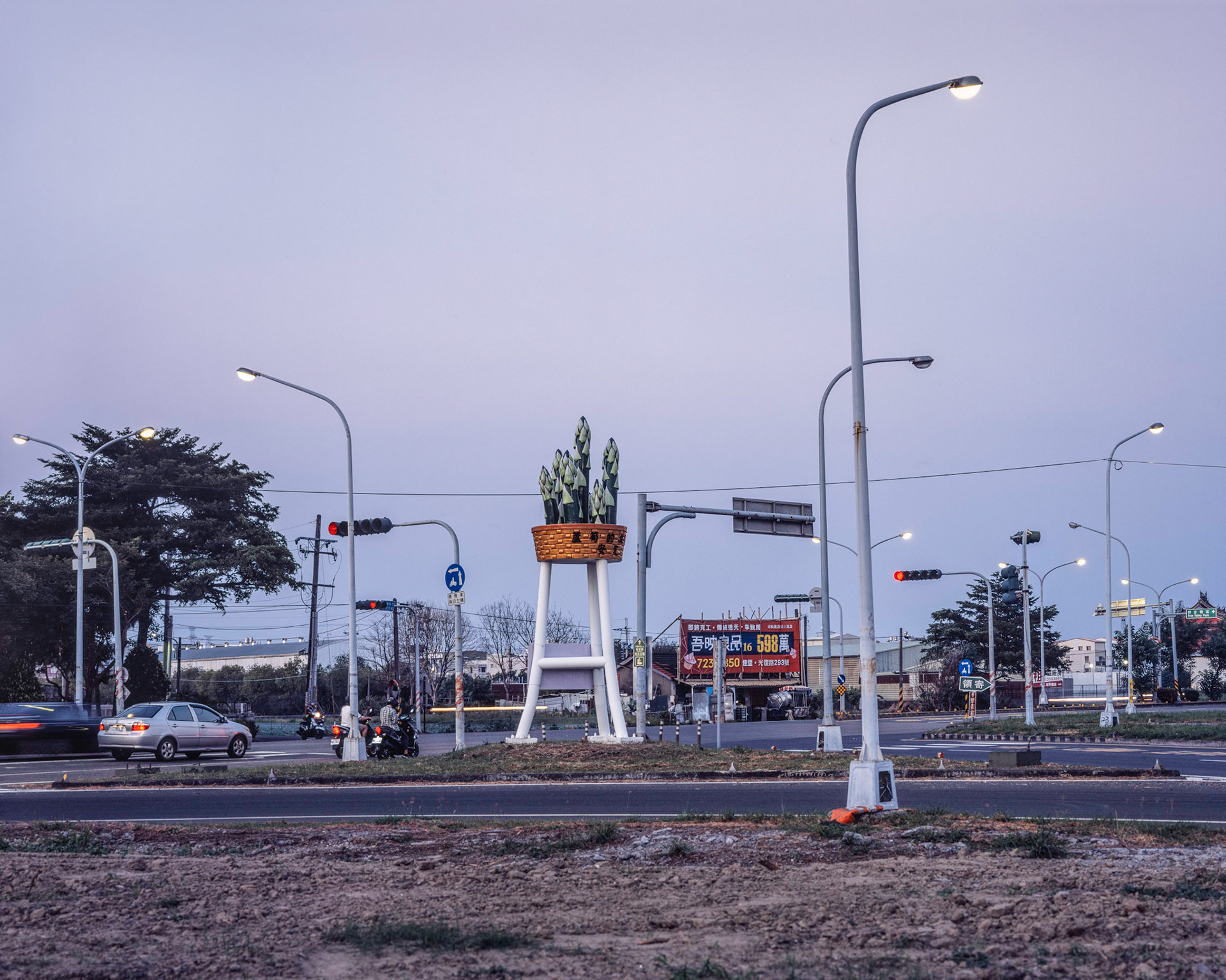
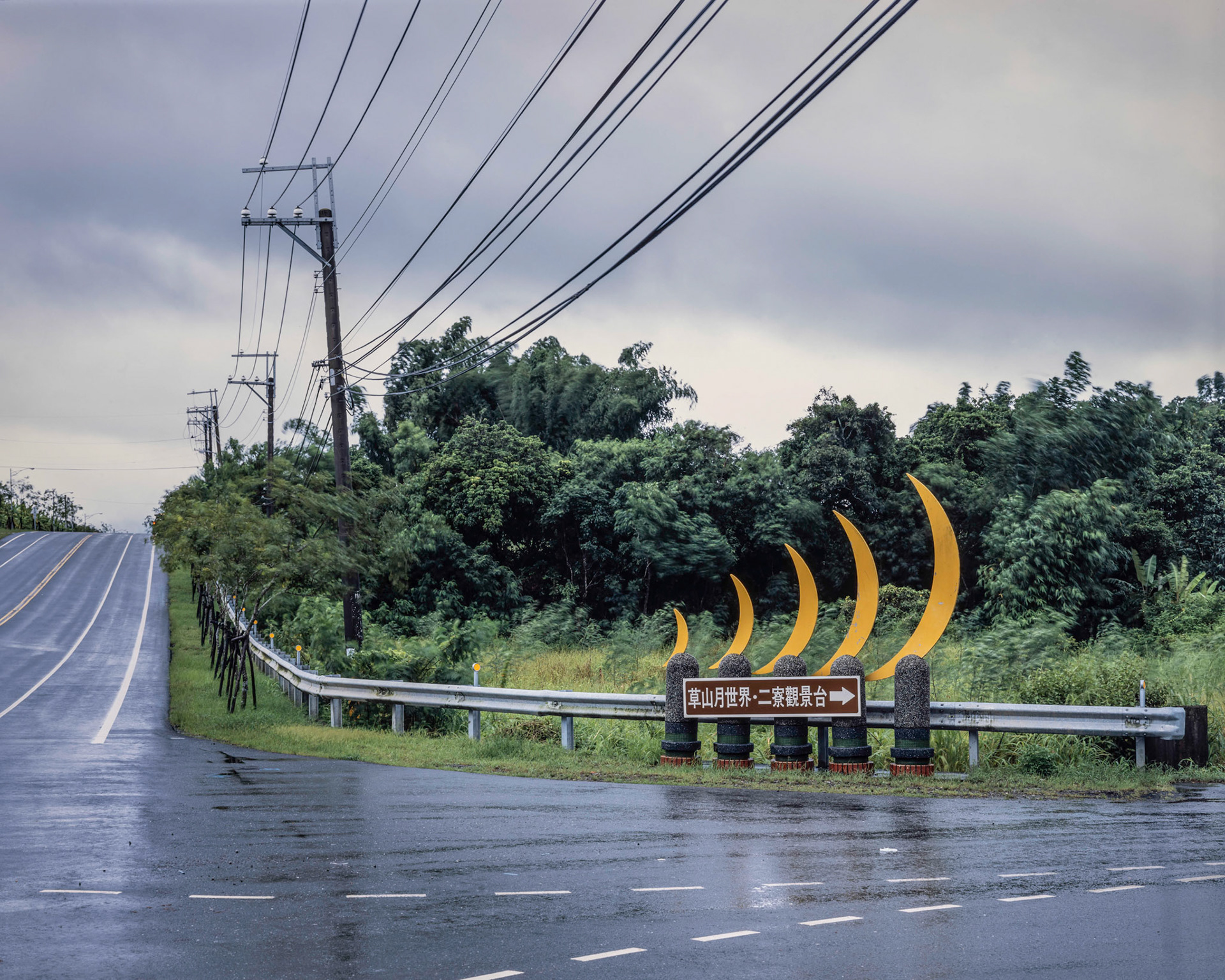
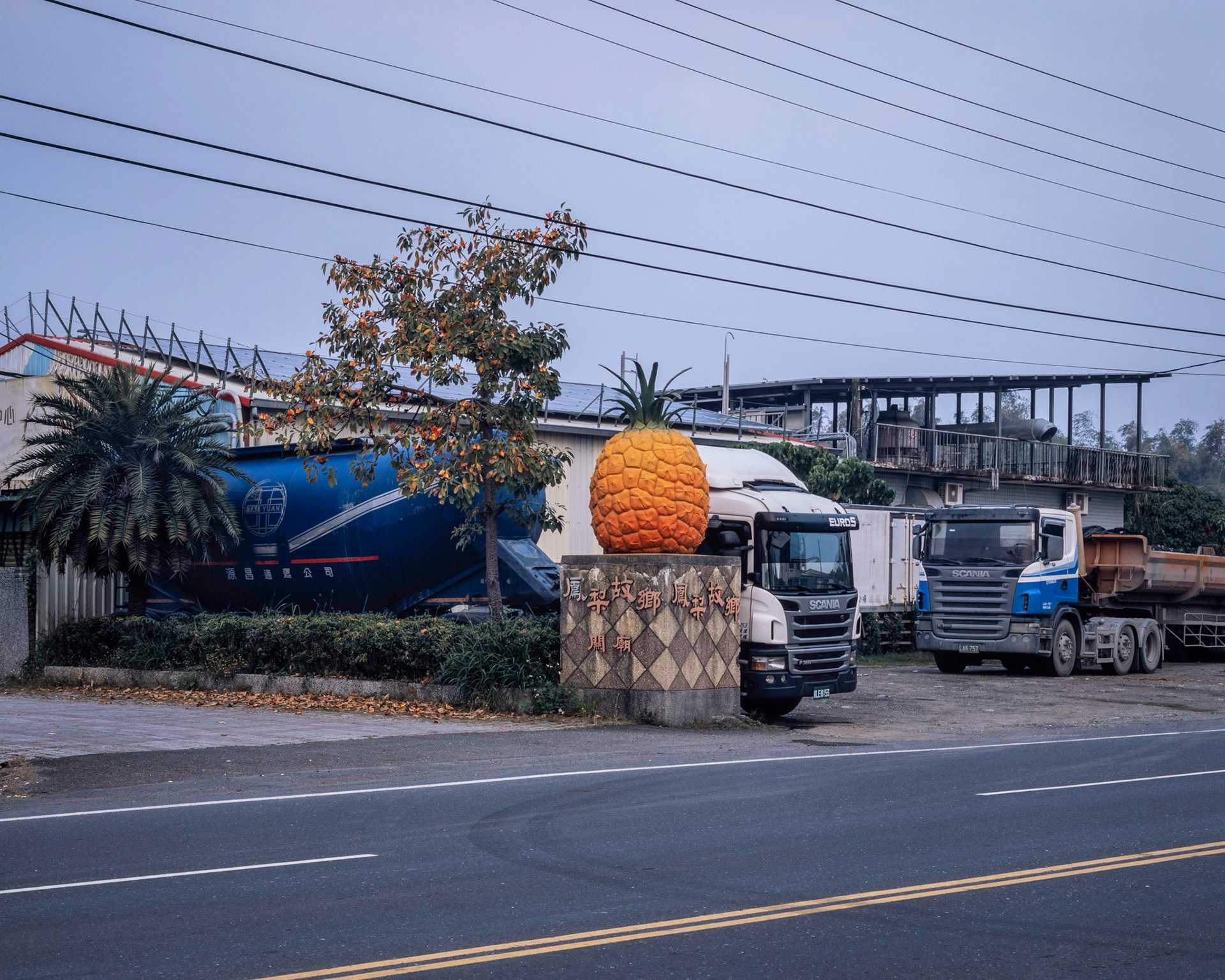
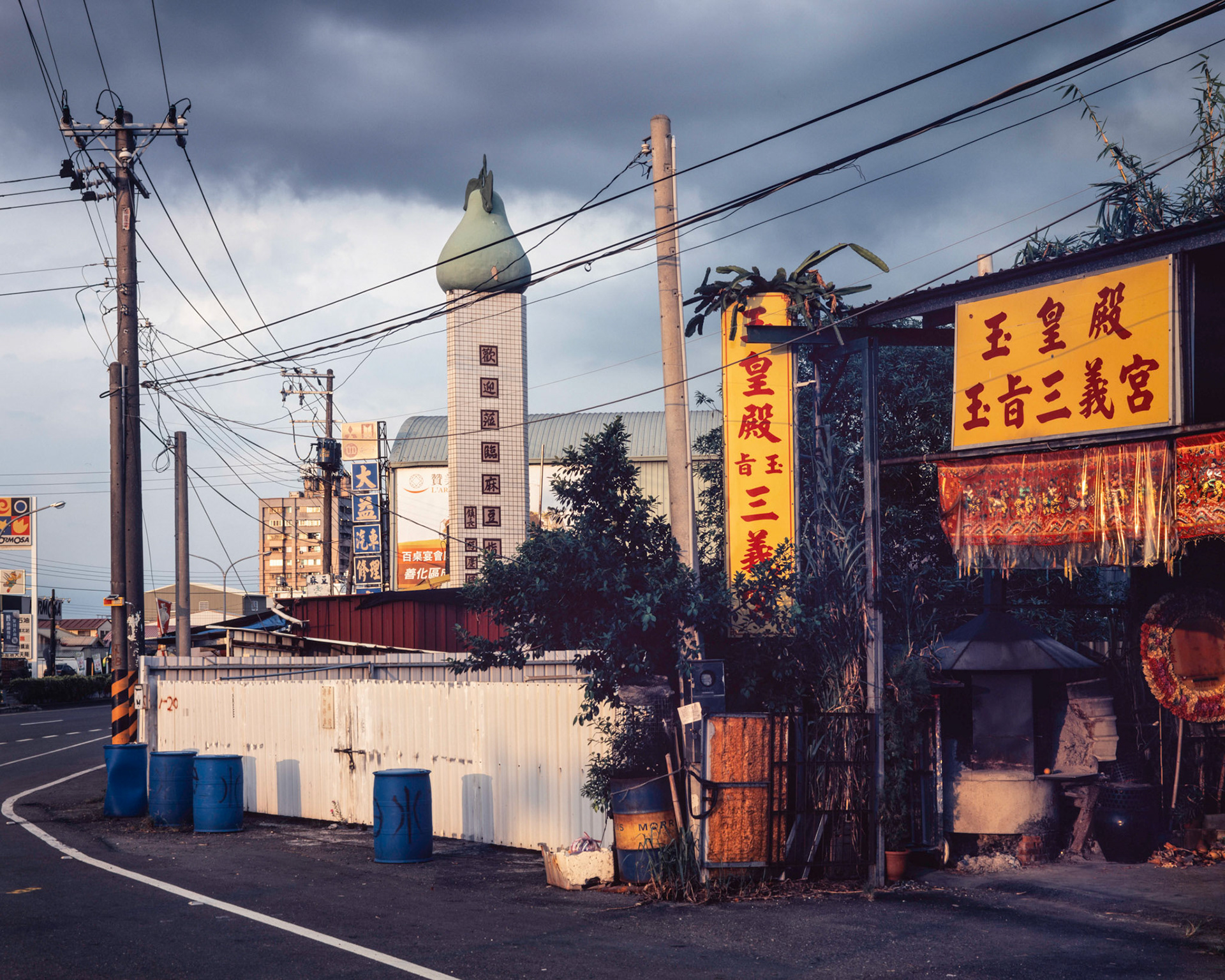
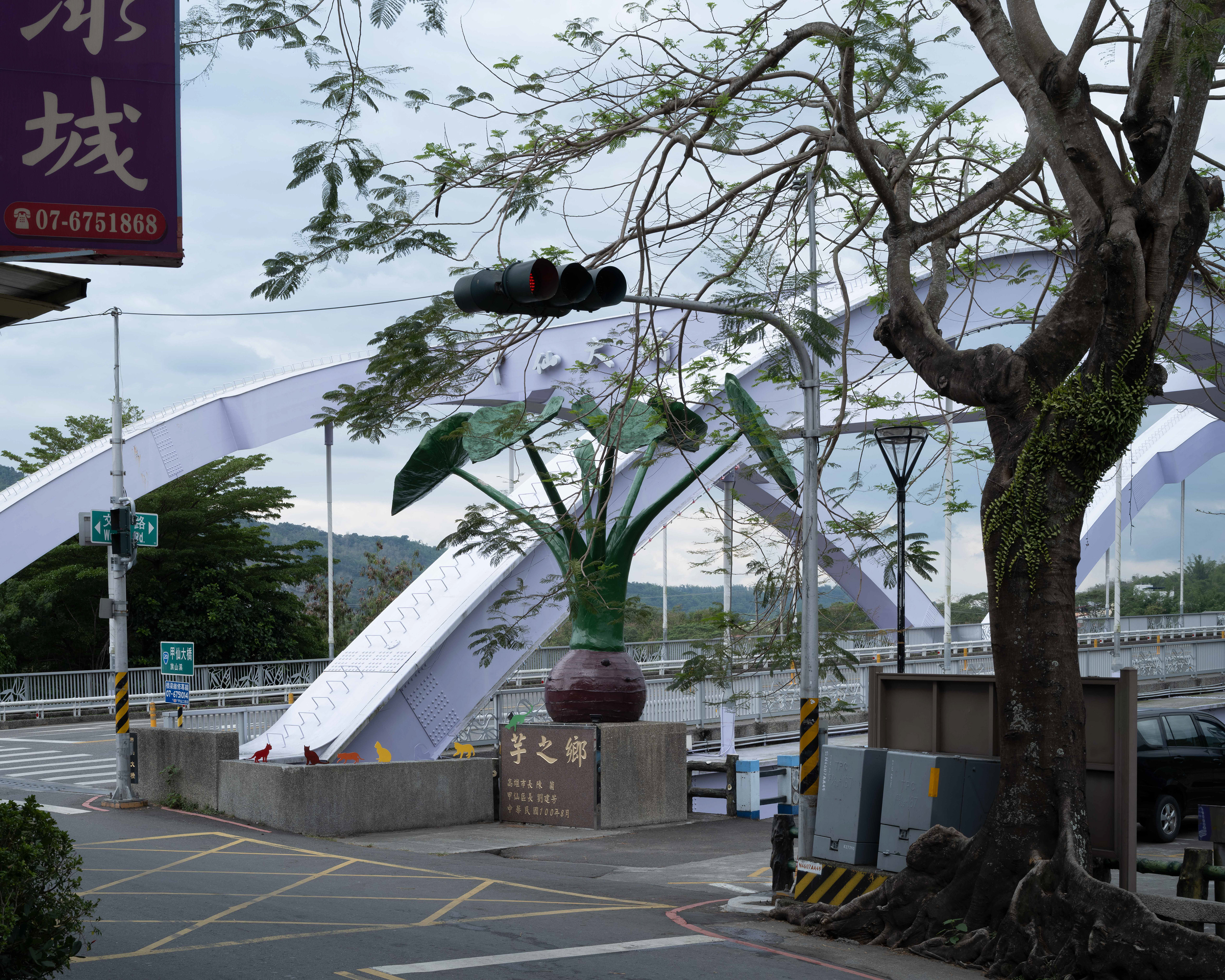
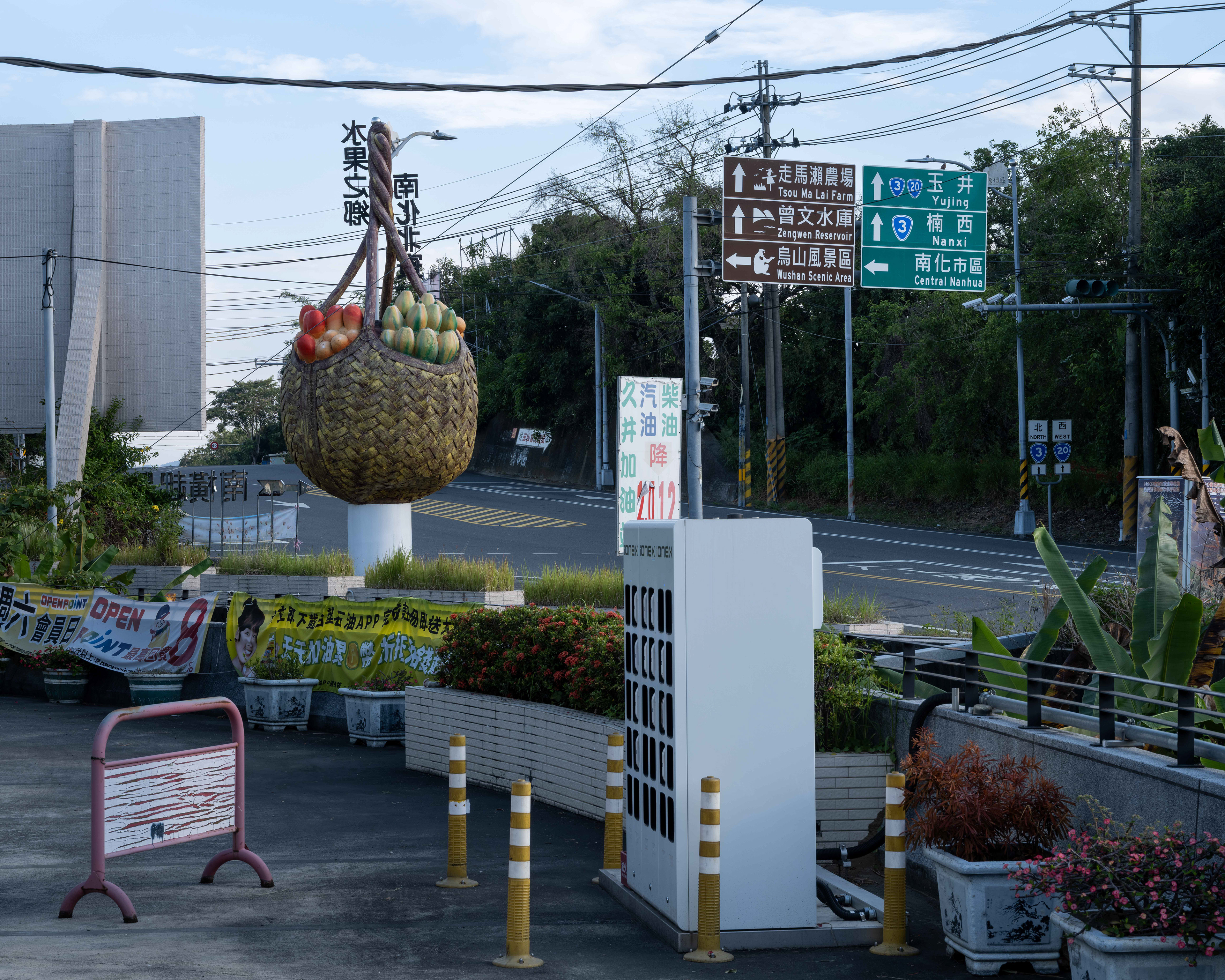
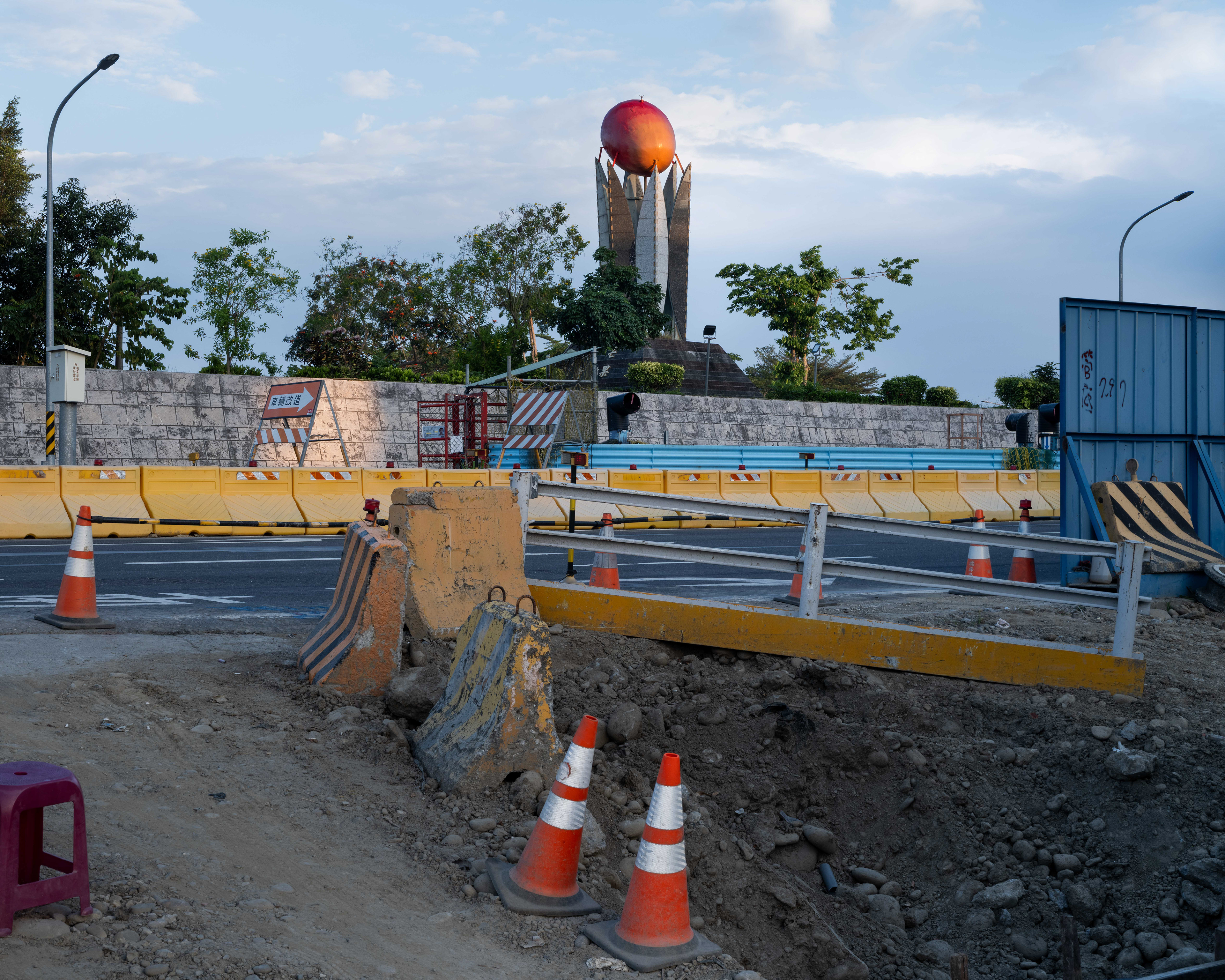
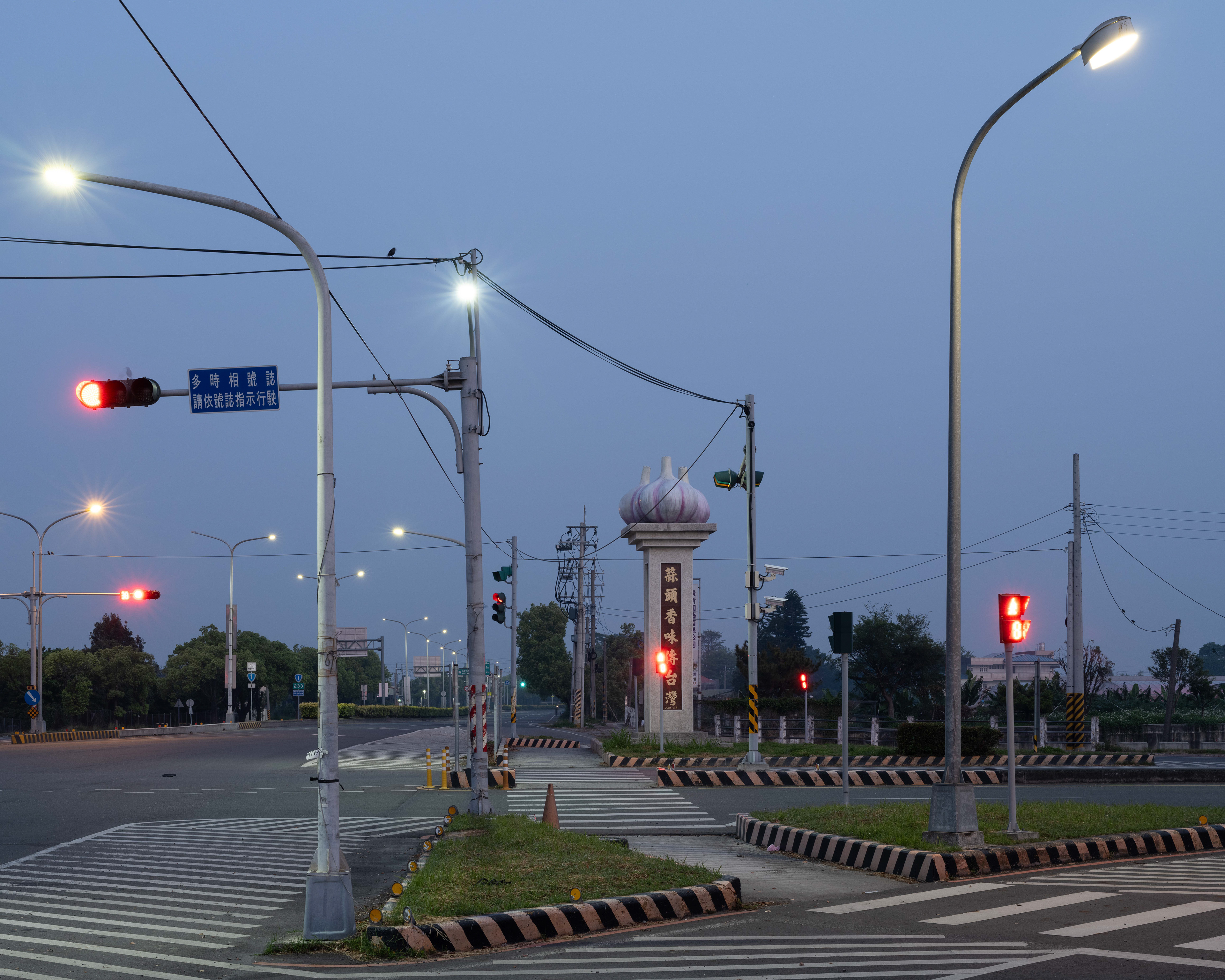
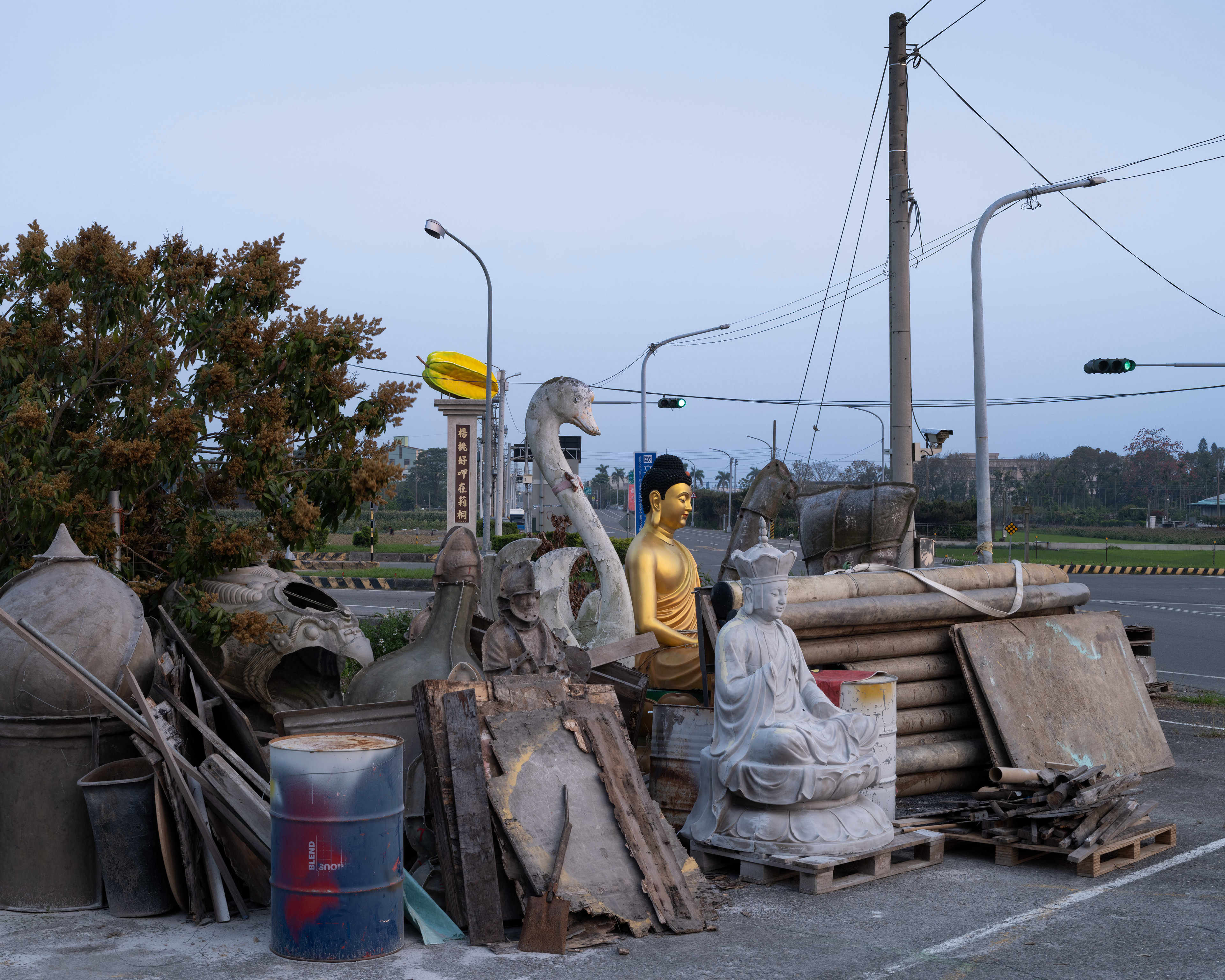
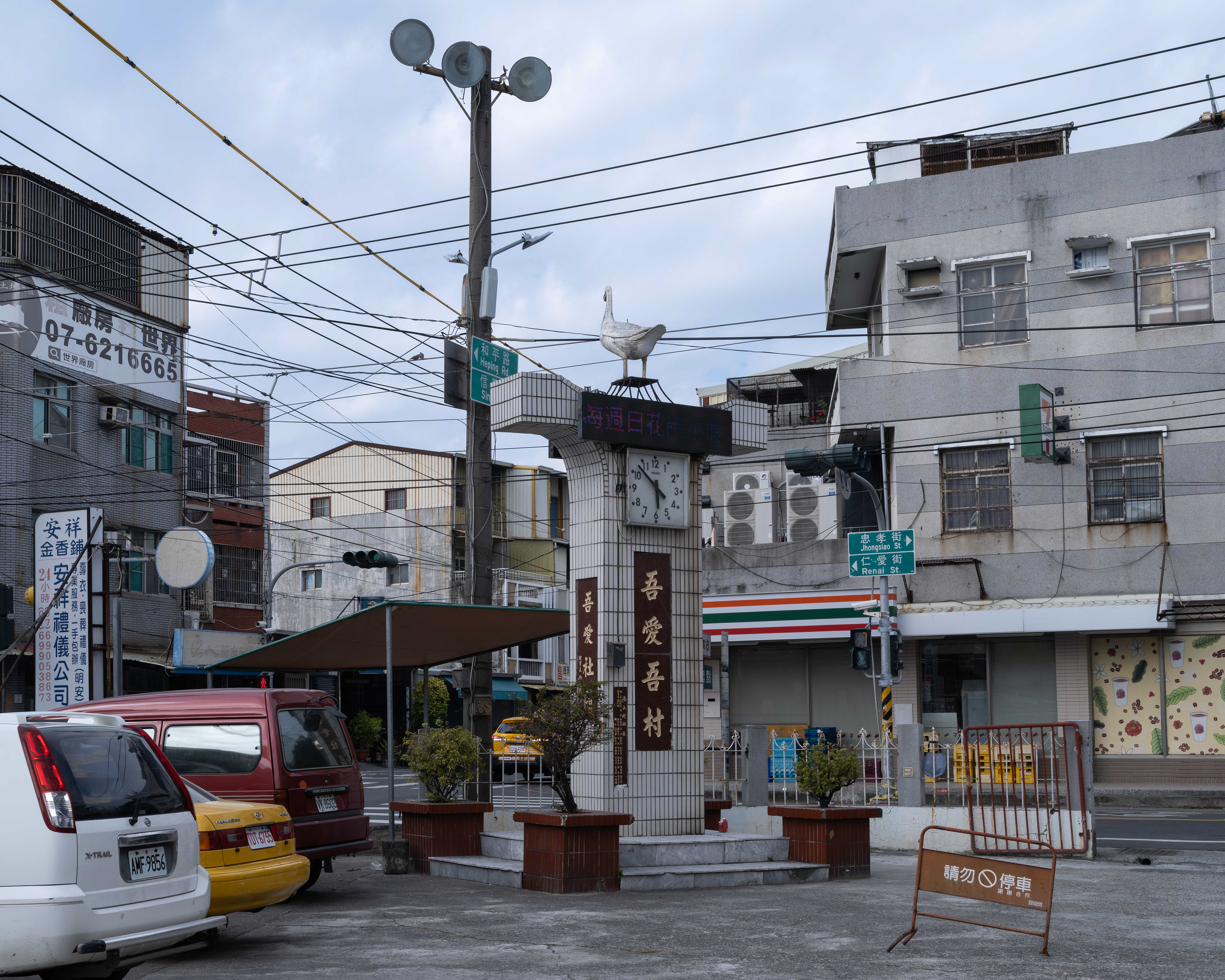
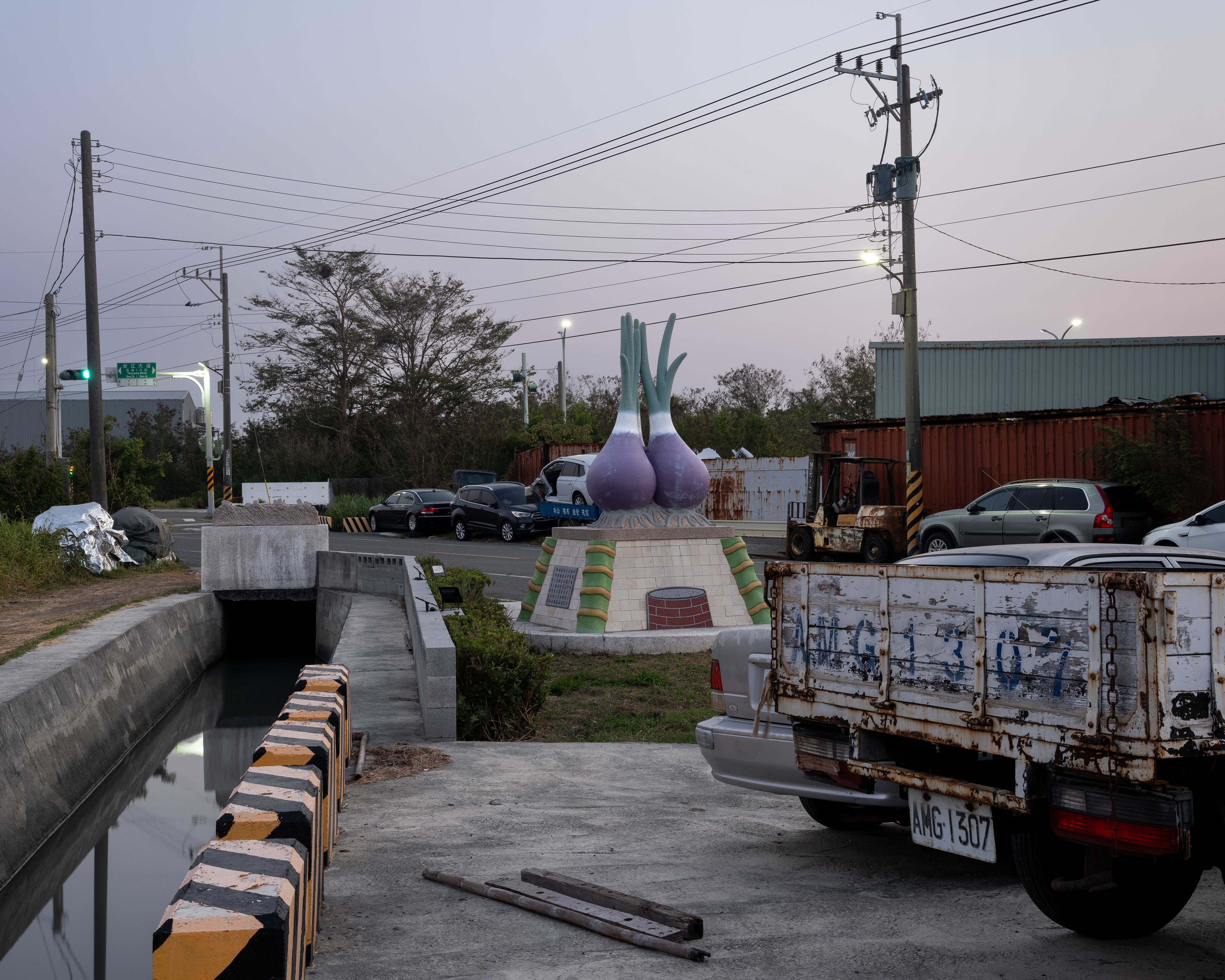
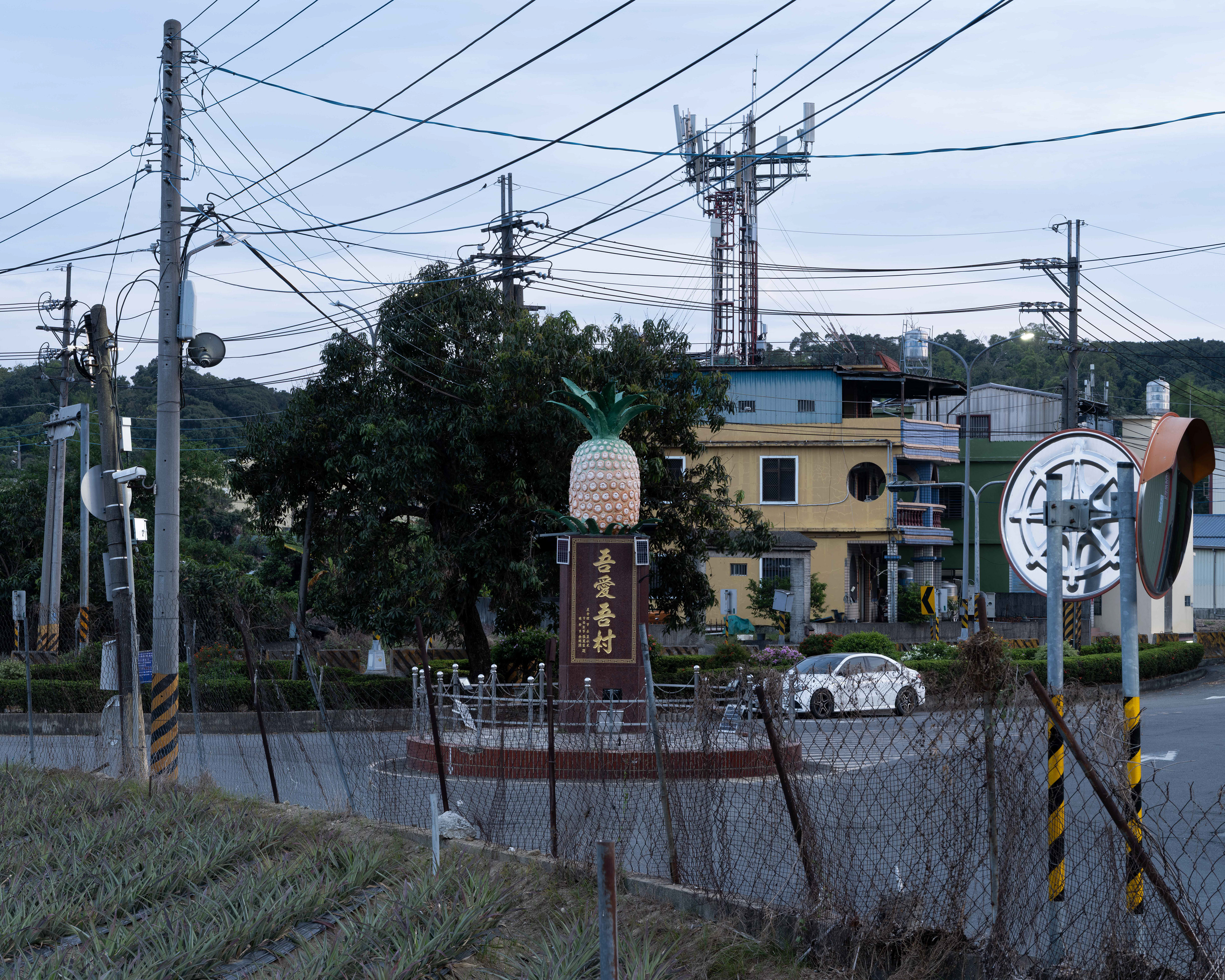
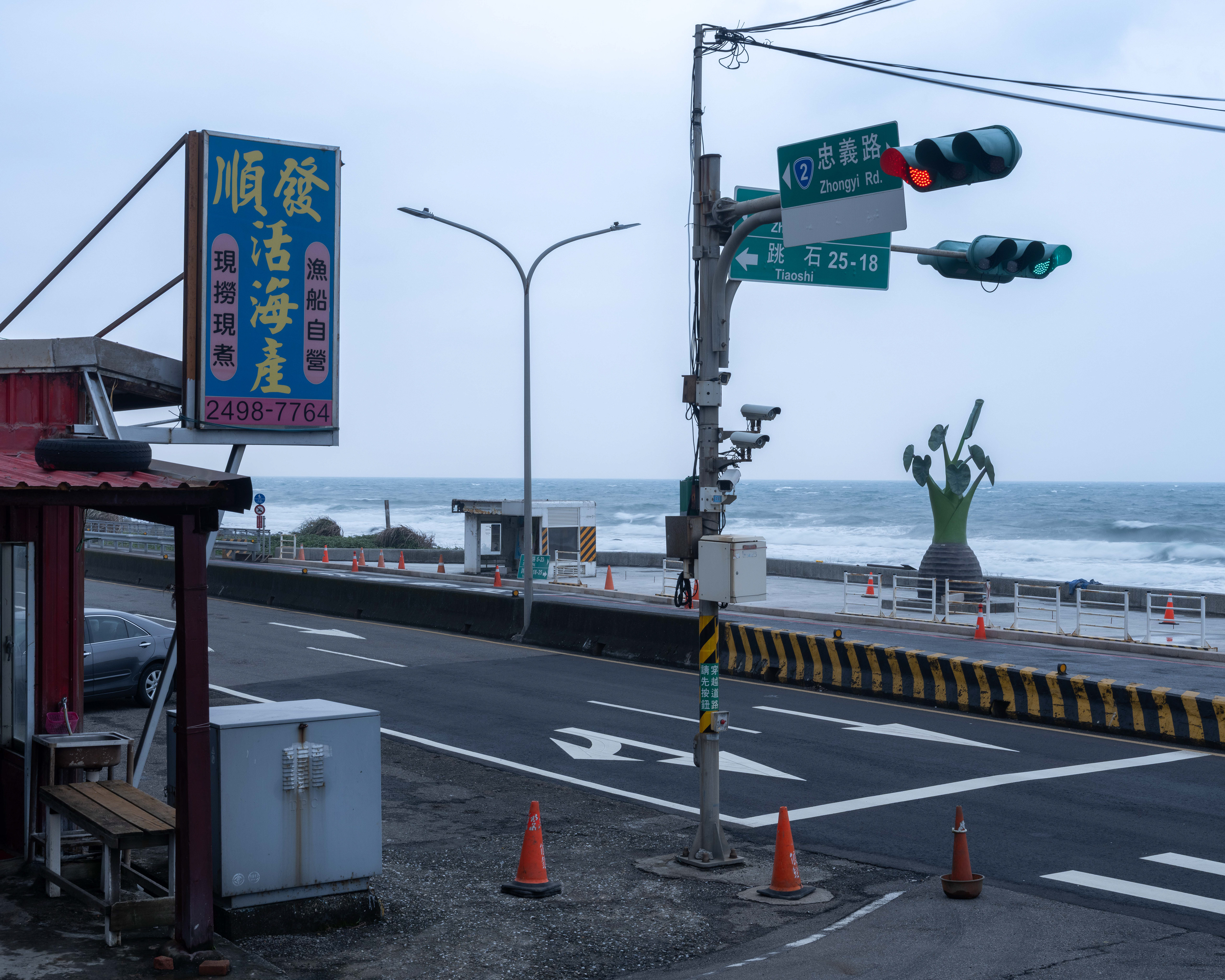
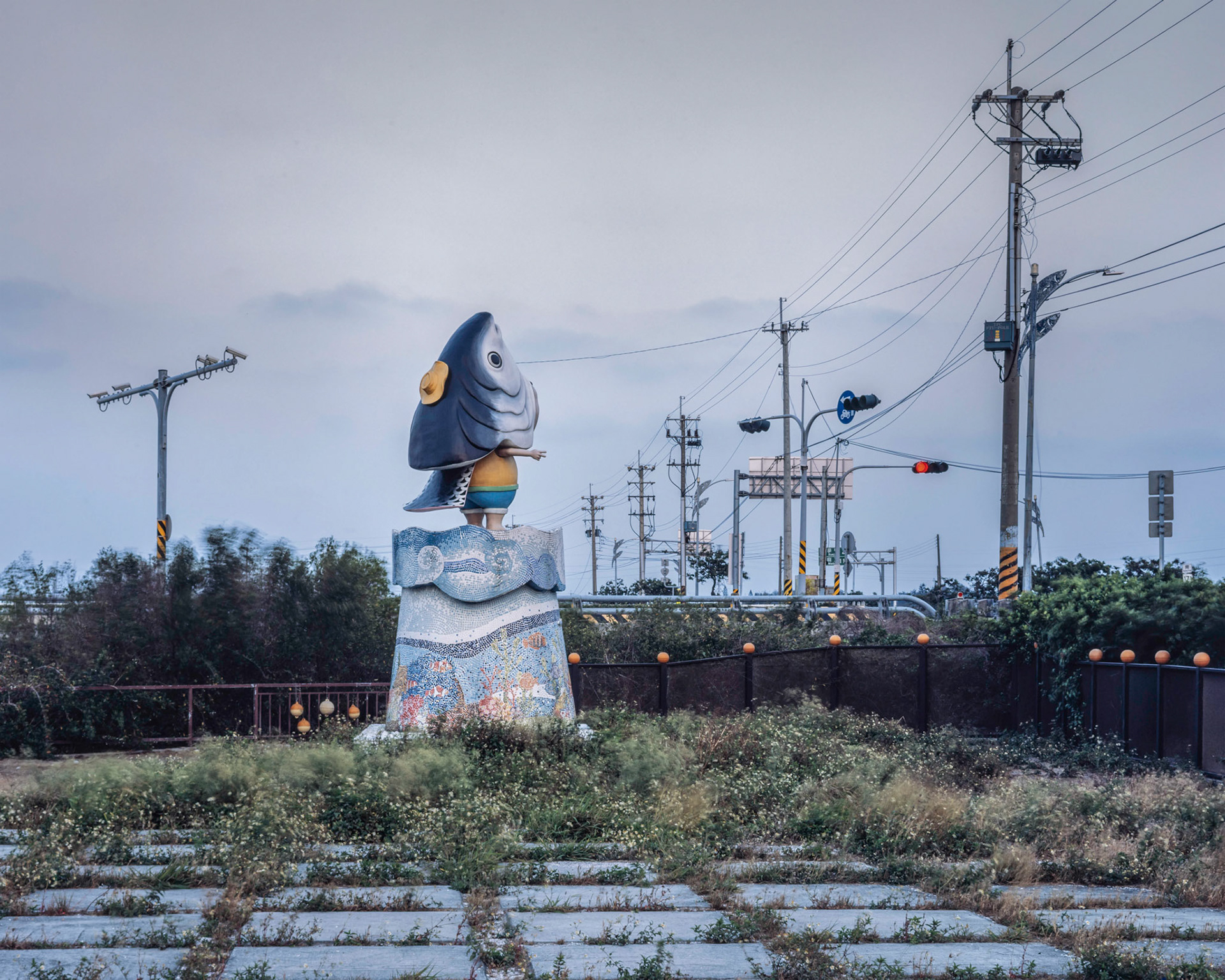
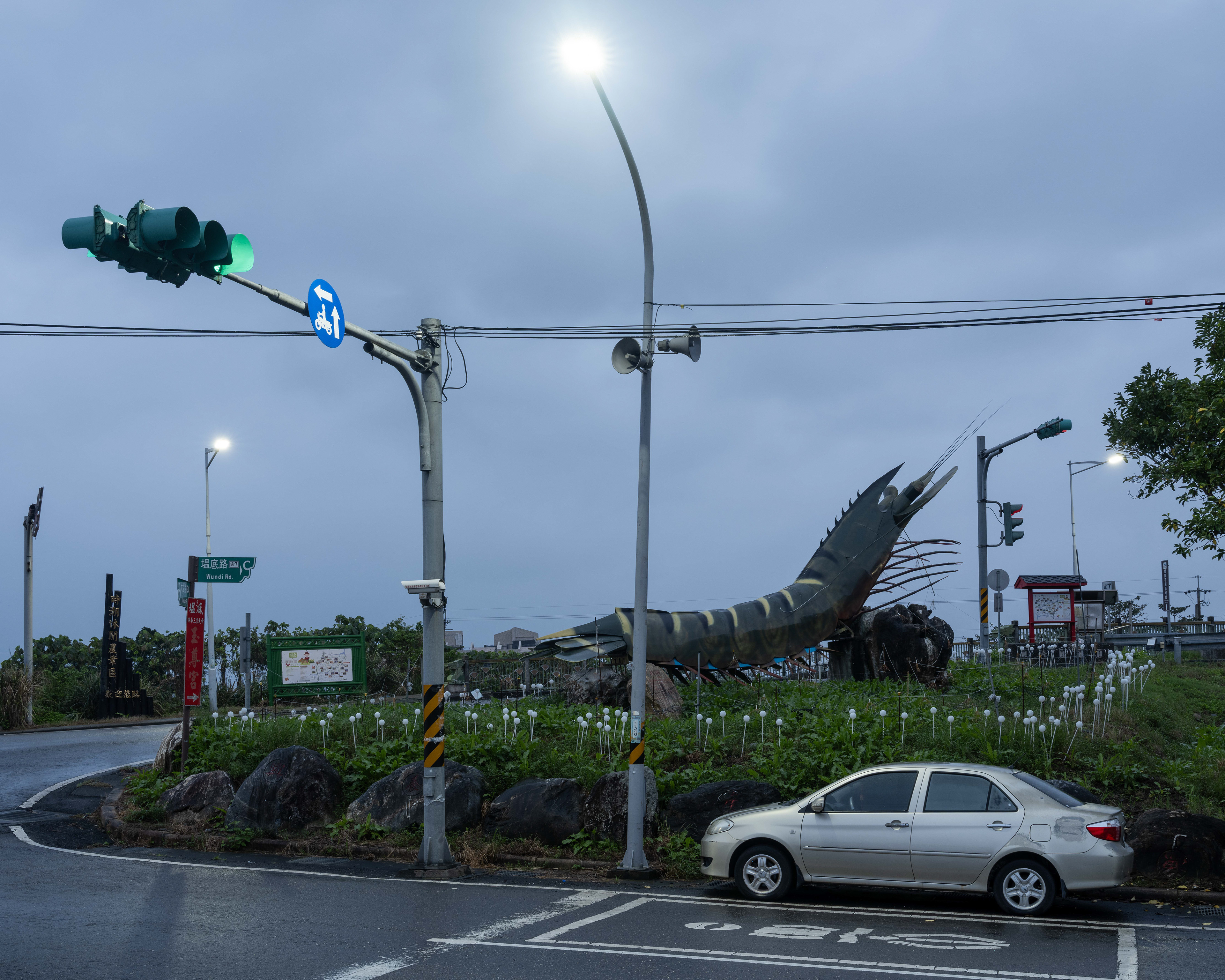
Each entrance is more than a physical passage—it marks the boundary between regions, cultures, and histories. In Taiwan, such entranceicons often take the form of community gates, large sculptures, landscape mascots, or stylized landmarks situated at the edges of towns andvillages. These structures typically incorporate local industries, regional identity, or governmental promotional messages, forming a hybridbetween public art and community installation. Through exaggerated forms and oversized, figurative symbols—animals, crops, or industrialmotifs—they produce a visible sense of place and reinforce collective memory and local identity.
Through photography, I collect and categorize these highly recognizable entrance features, re-examining their often banal or kitschaesthetics. In doing so, I transform them into cultural images that reveal how place-based identity is shaped through institutional and visualstrategies. These “entrance objects” function not only as geographic markers but also as visual apparatuses of history, power, and cultural narrative—subtly influencing the way local character is represented and remembered within Taiwan’s contemporary landscape.
標記一處所在
每一處入口不僅是物理上的通道,更是地域之間的標誌,界定著不同區域、歷史與文化的邊界。它們承載著豐富的歷史記憶與文化意涵,成為地景與社會的象徵,也映照著人類活動的軌跡與地方認同的形構。這些入口意象是一種地域、時空與文化交織下的視覺符號,既日常又具象徵性,存在於我們再熟悉不過的生活移動與視覺經驗中。
在台灣各地,這類入口常以社區門面、大型雕構、地景塑像或地方吉祥物的形式出現,廣泛分布於鄉鎮村落的邊界地帶。這些造景往往結合地方產業特色、地緣文化與政策推廣的意圖,形成介於公共藝術與社區裝置之間的特殊景觀。透過誇張造型、超比例尺度與具象符號的運用,它們構築出一種「可被觀看」的地方性意象,進一步強化群體對於地方的共同記憶與身份認同。
我透過攝影蒐集與分類這些具有辨識度的入口意象,試圖重新觀看這些原本庸常、甚至帶有俗艷感的地景物件,使其在影像中轉化為可思考的文化圖像。這些「入口物」不僅宣示地理邊界,也作為歷史、權力與地方認同敘事的視覺裝置。它們深刻影響著地方性格與文化表達,並構成台灣當代地景中一種獨特而值得關注的社會文化現象。